Click on each box below to see projects from that co-op.


About Baxter International
Baxter is a global healthcare company founded in 1931 as the first commercial manufacturer of prepared IV solutions. Since then, they have built a huge portfolio of products and services empowering both healthcare professionals and their patients.
In 2021, Baxter acquired Hillrom, a leader in the hospital bed industry. The operations where I worked in Batesville, Indiana used to entirely be Hillrom and essentially remained the same even after being acquired.
I cannot share much of what I worked on while at Baxter as it contributes to unreleased products, but please enjoy the few things I can!
Hackthon & Bed Delivery
One of my biggest accomplishments during my experience at Baxter was winning 3rd place in a Baxter-wide hackathon, leading to 4 submitted invention records. The hackathon was not opportunity I was originally supposed to be part of, but I jumped at the chance to join and ended up contibuting to the brainstorming and execution of a video demonstration along with 12 others ranging from marketing managers to engineers – and my suggestion for the team name was chosen! Afterwards, I continued the hackathon's mission with one of the other members, leading to me submitting 2 invention records where I was the primary contributor.
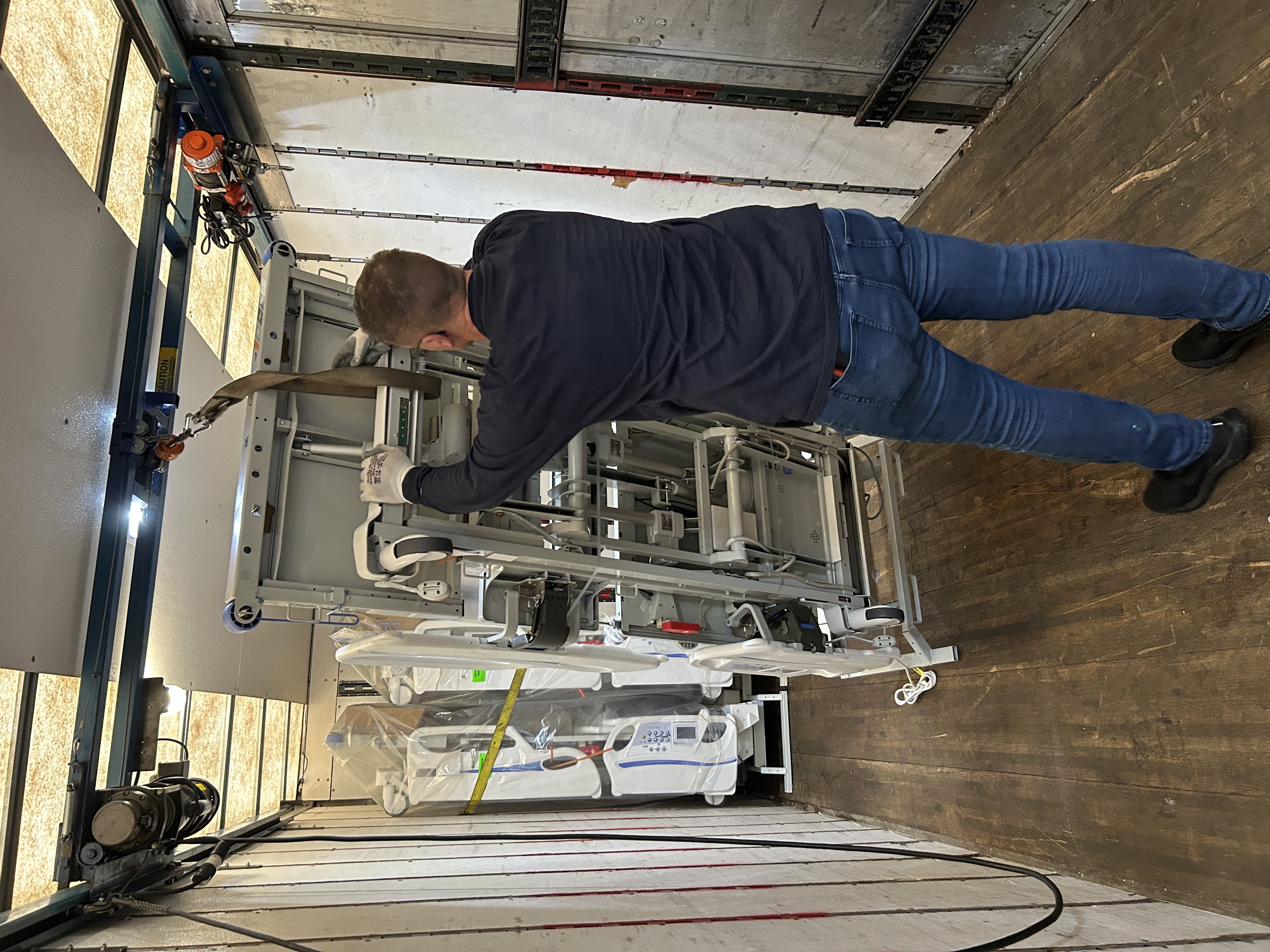
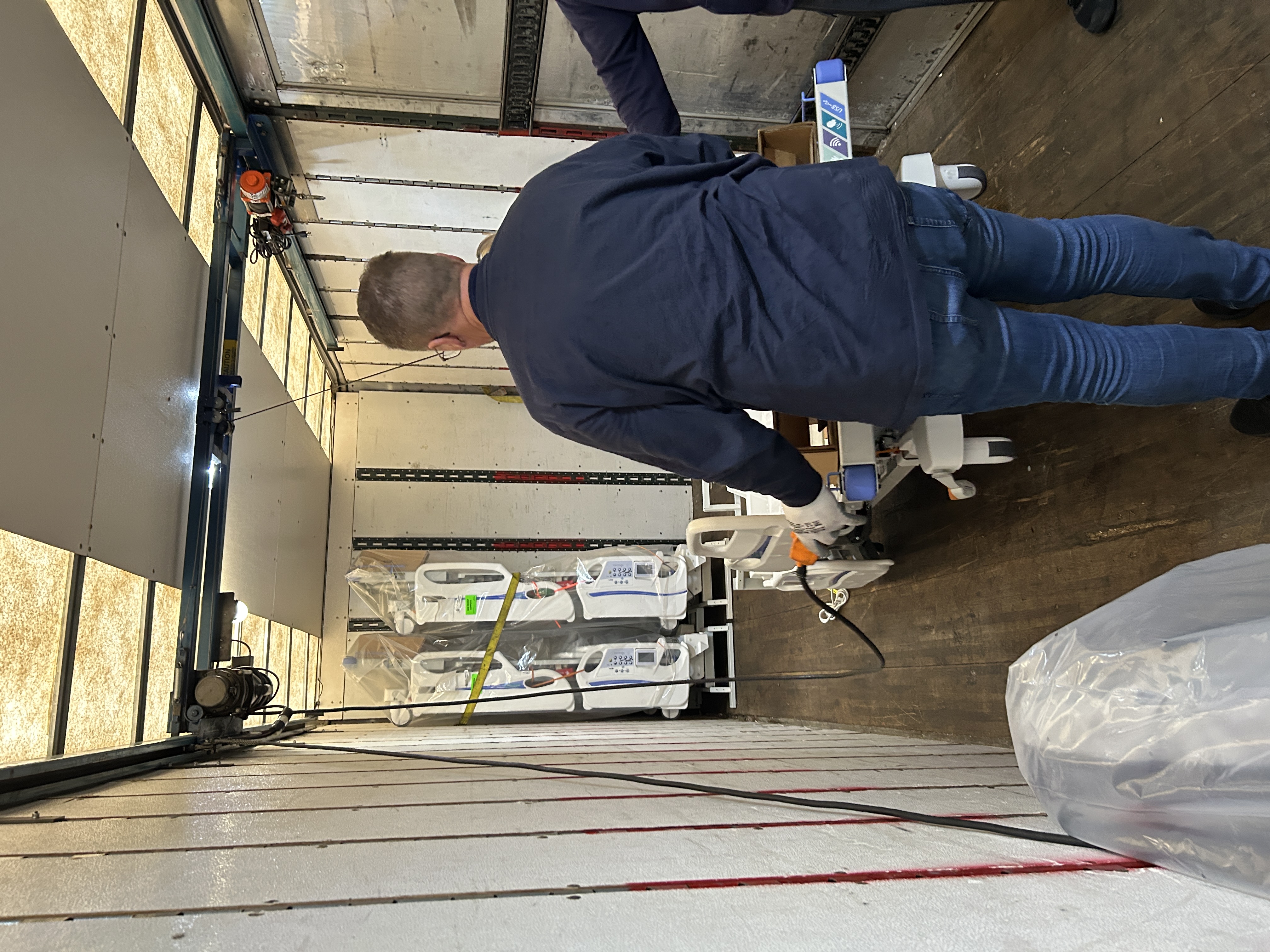
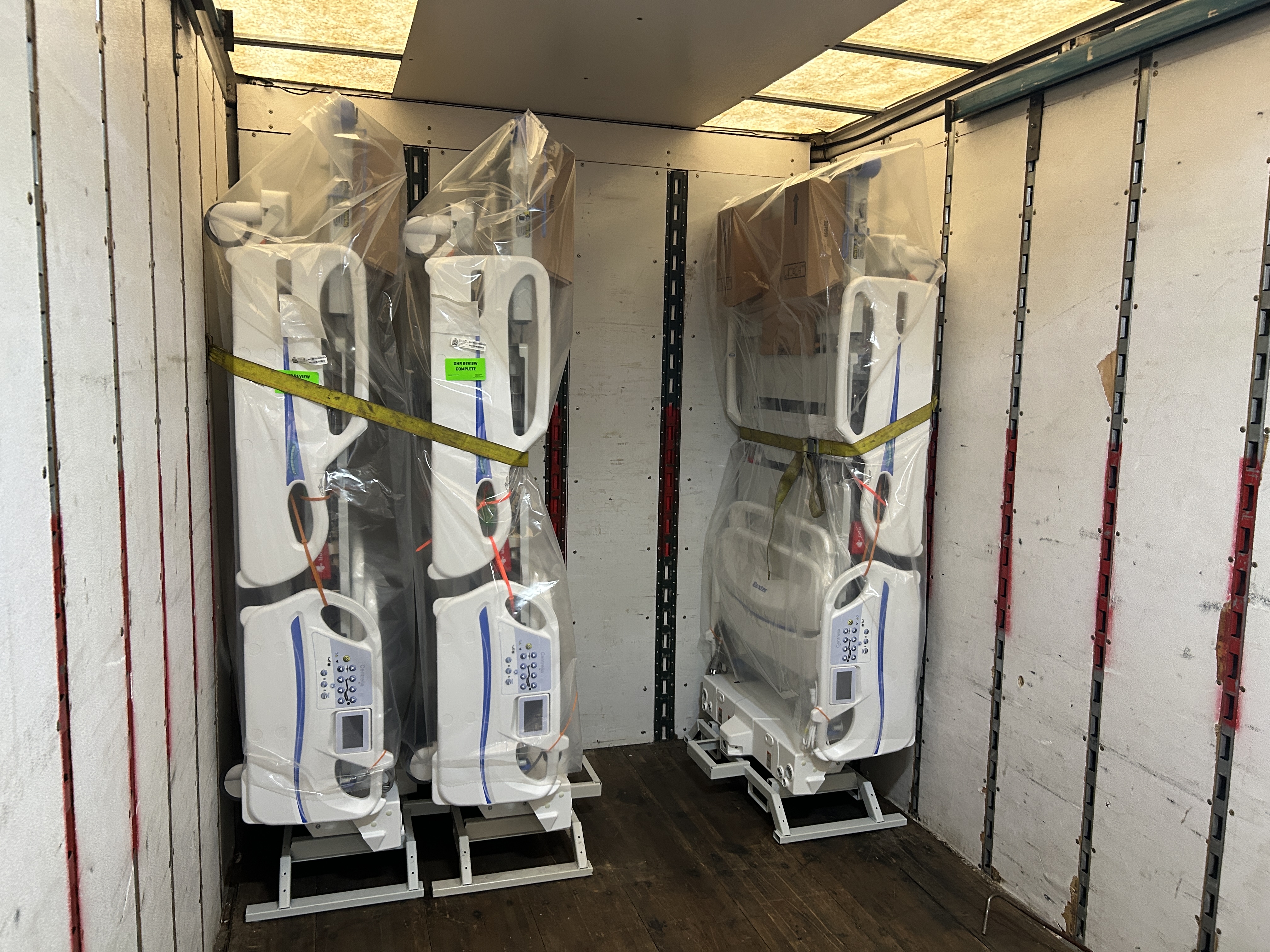
Since I cannot share any specifics or images from the hackathon, enjoy these photos of a bed delivery I joined to UC Health's West Chester Hospital.

Acting as Patient in Studies
I helped in various formative and summative user studies for Baxter products by acting as a good, bad, or unresponsive patient.
Projector Mount
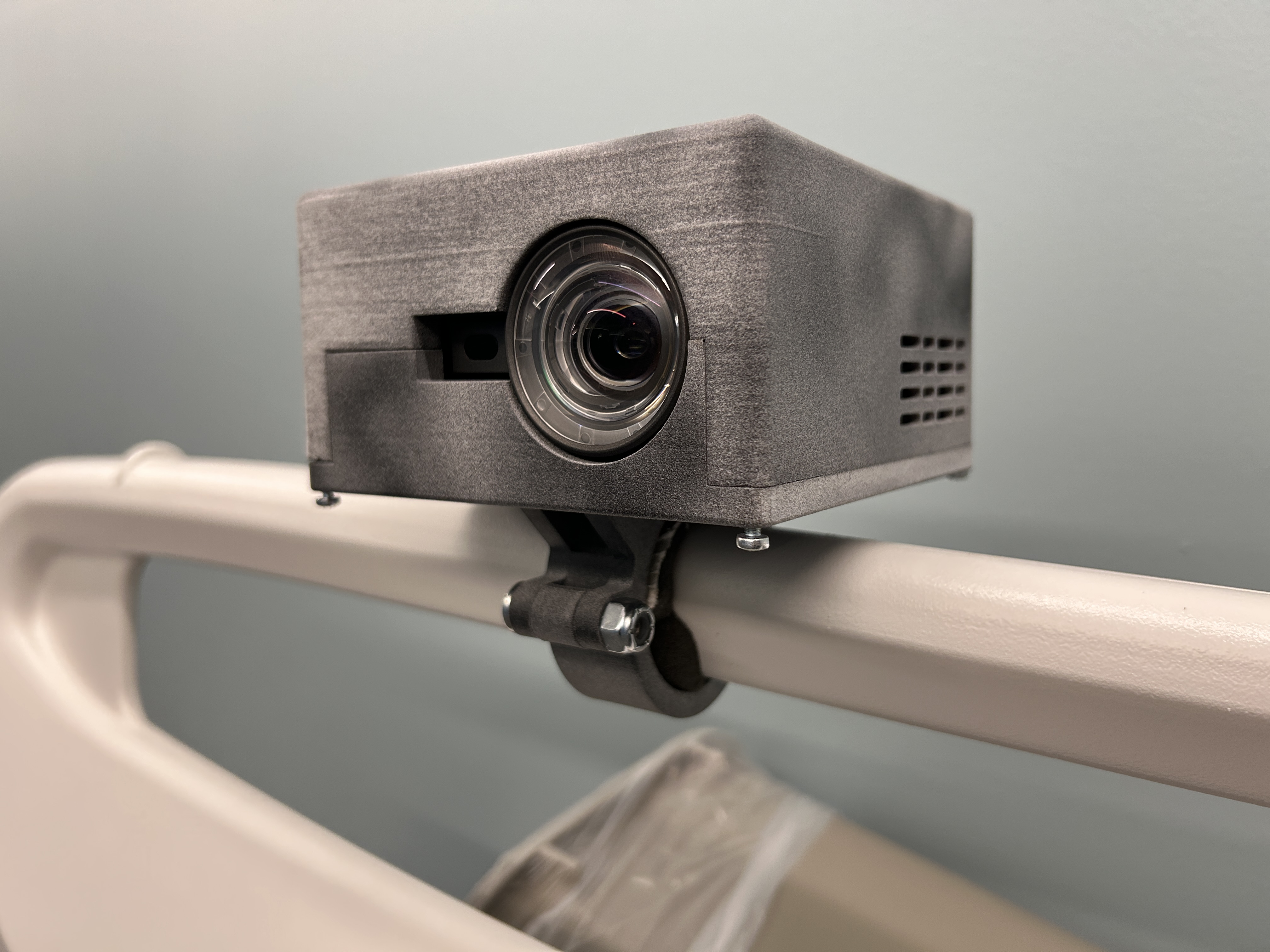
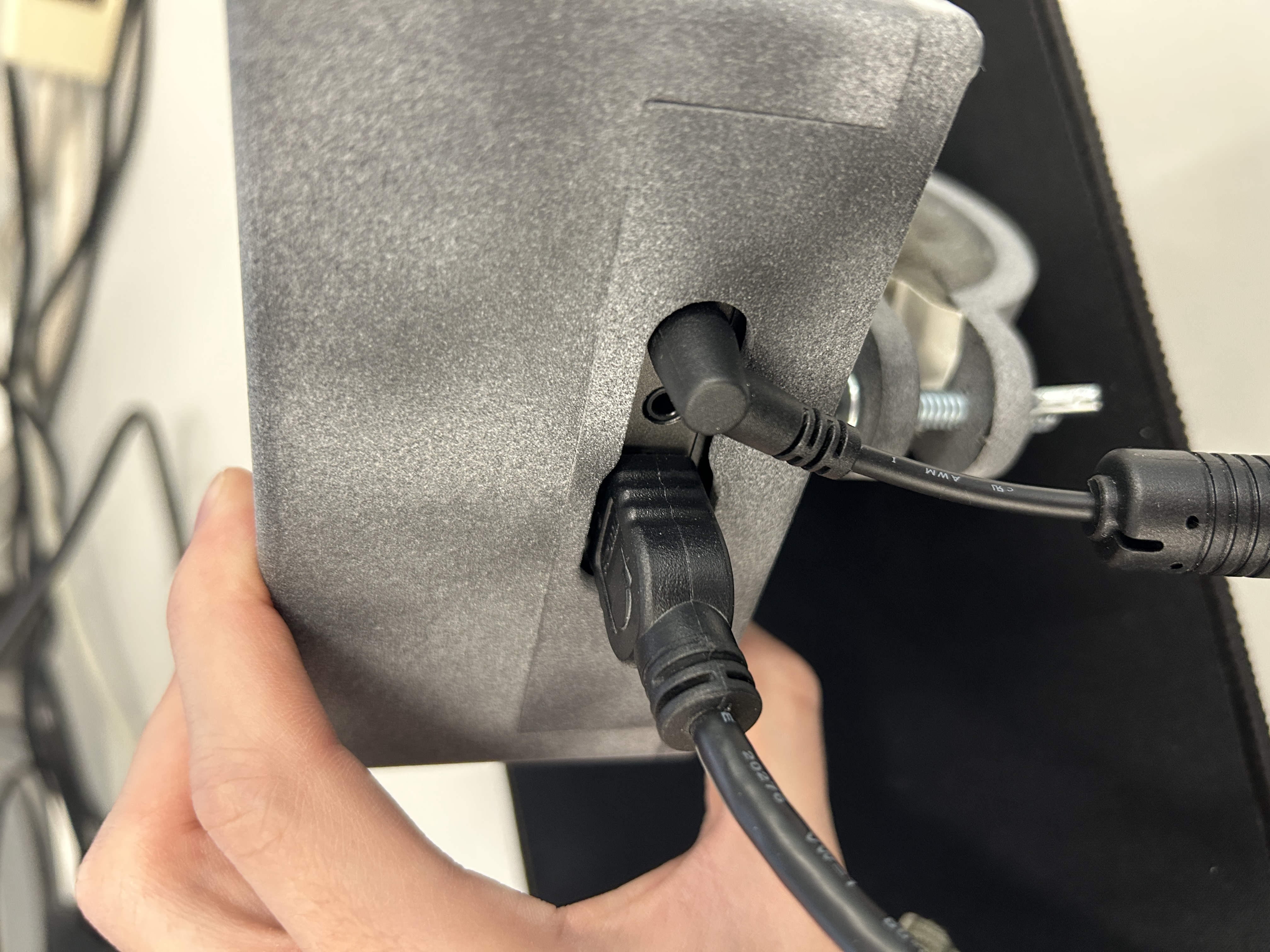
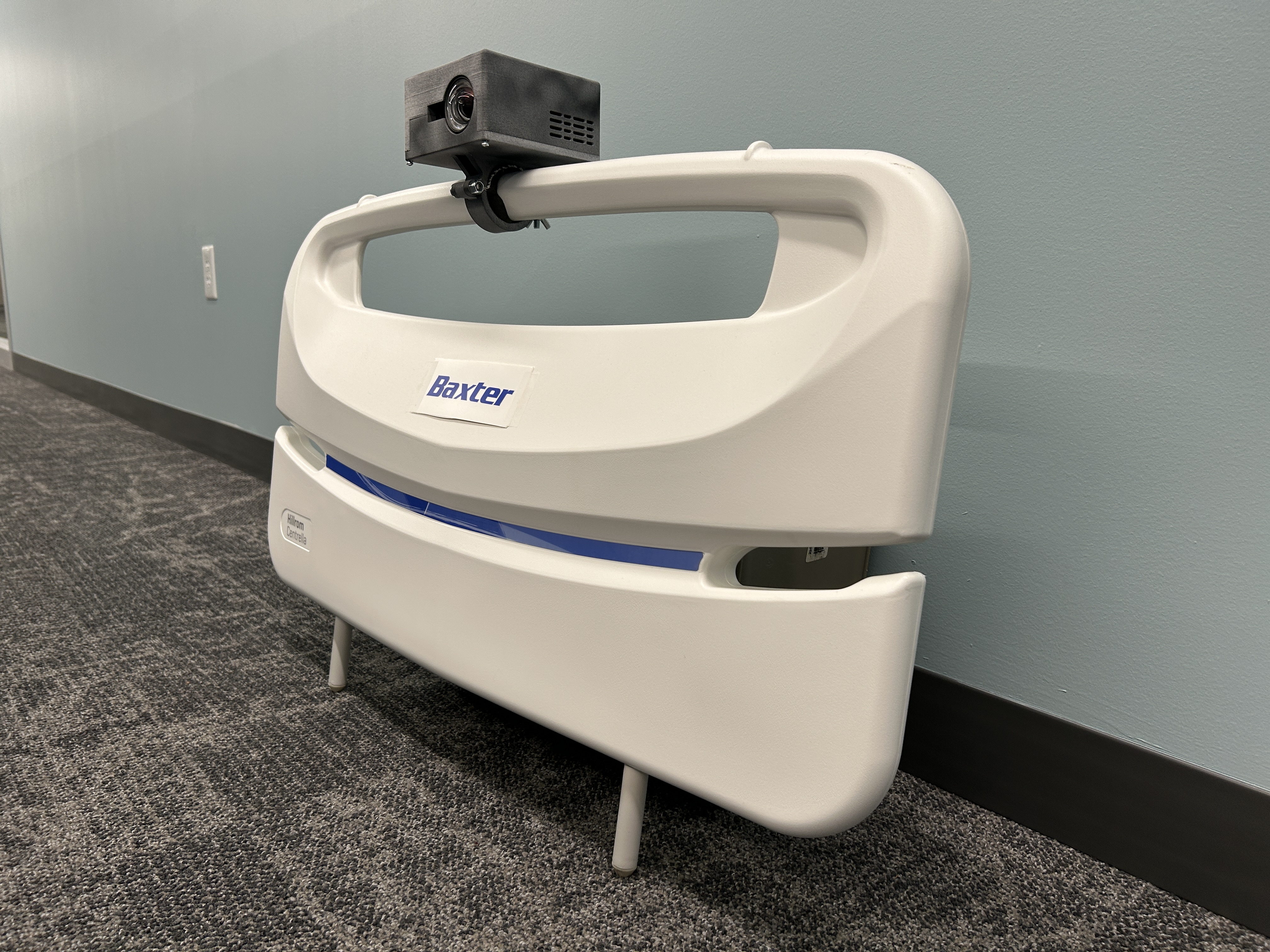
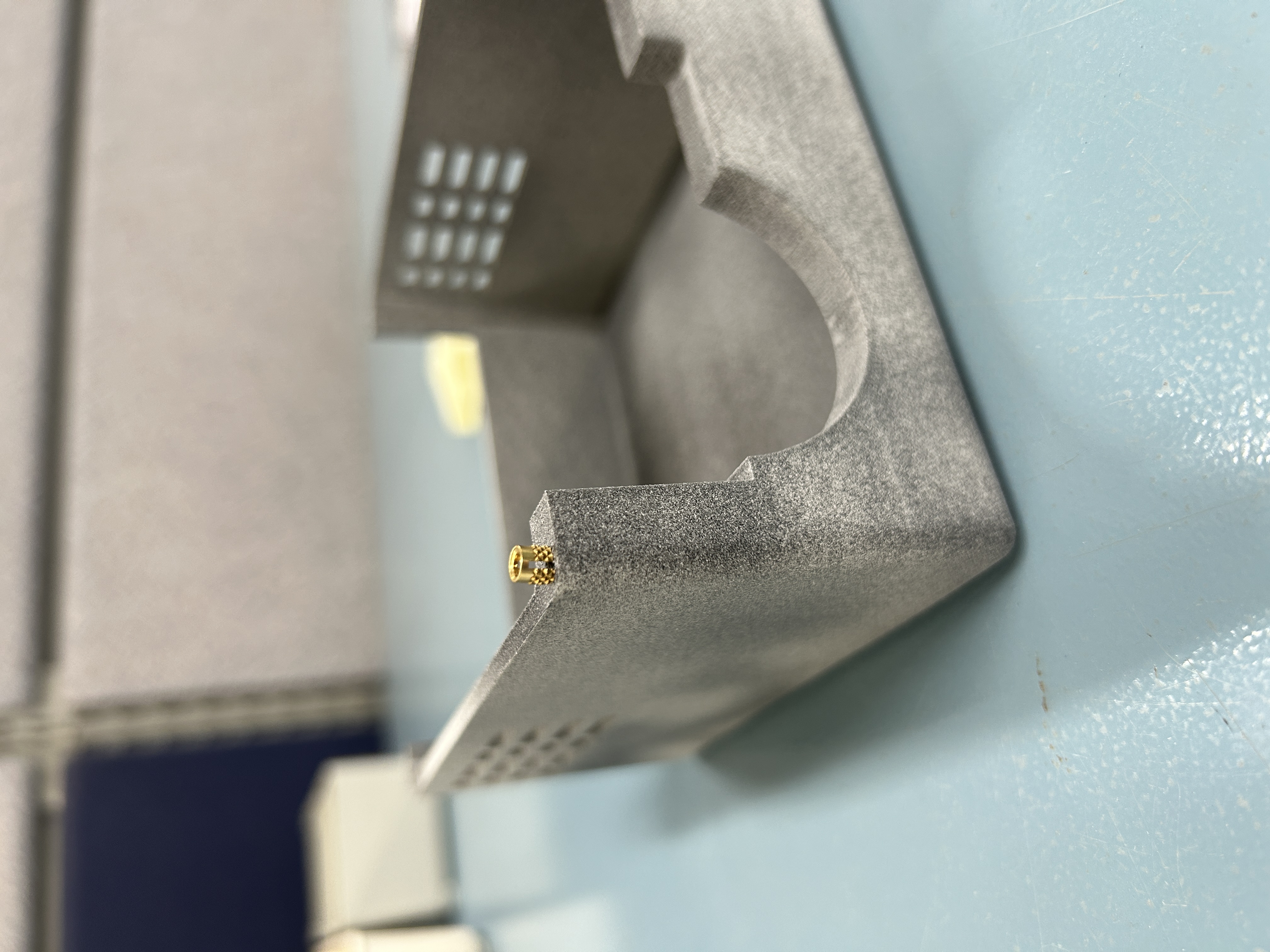
I CAD modeled this footboard-mountable case for a projector to be used in a demonstration. The hinge can be tightened by hand with a wing nut in order to easily adjust and hold the projector at an angle. It was powder 3D printed (PBF) by an in-house model shop and inlaid with threaded inserts.
About Smurfit Westrock
Smurfit Westrock does all sorts of packaging design and manufacturing, but my experience at their West Chester, OH design office was mostly involving merchandising displays for P&G products.
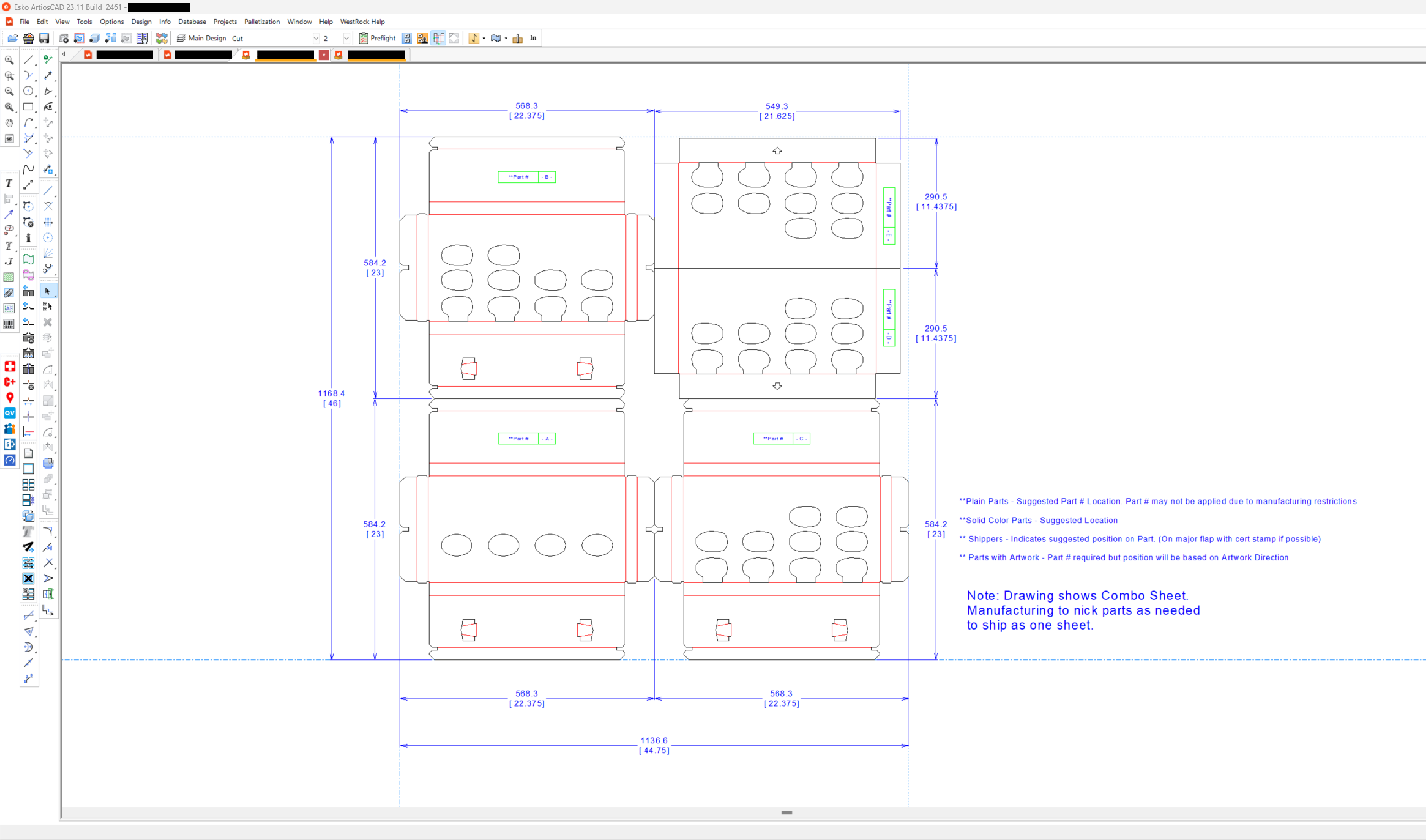
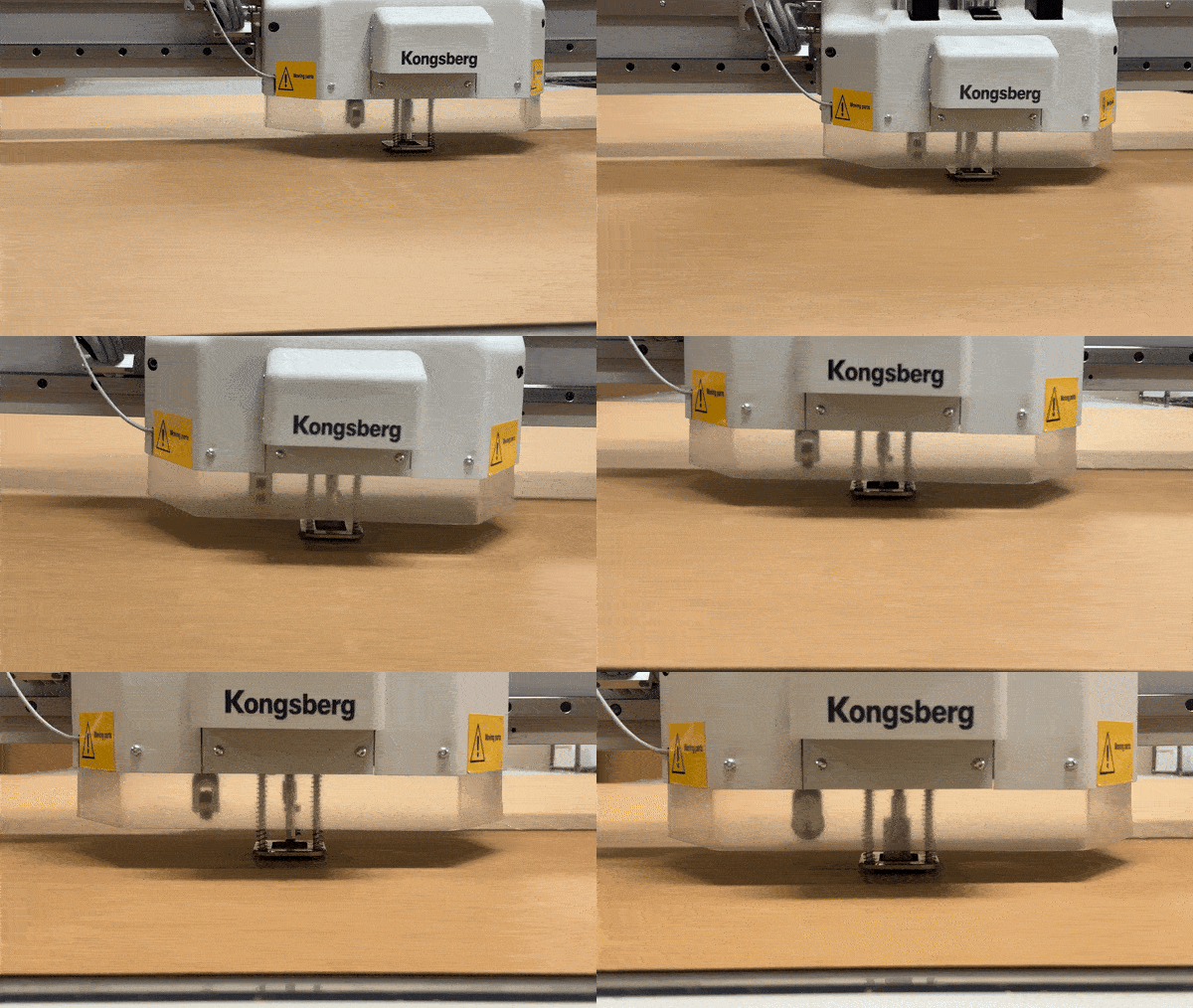
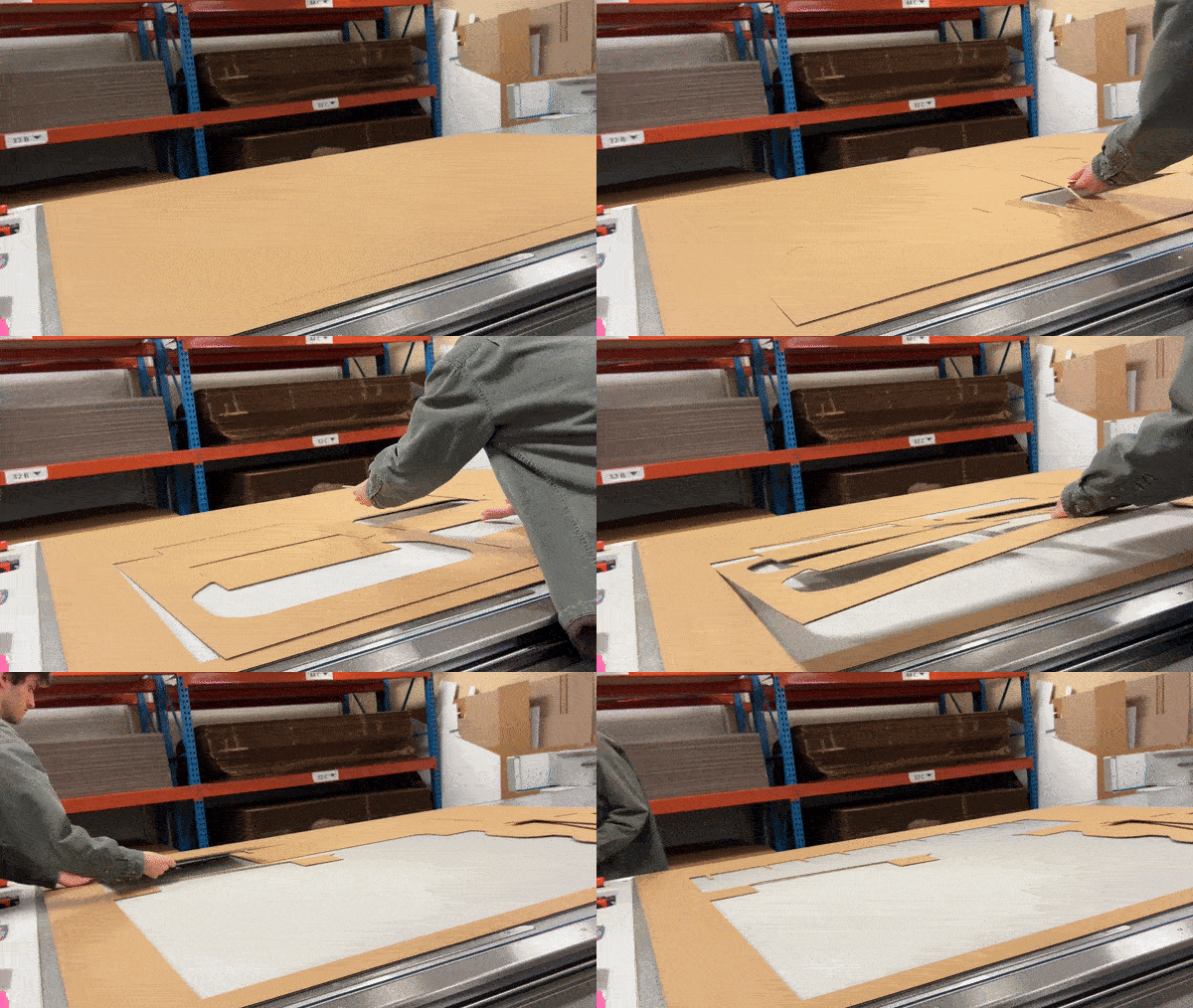
As a co-op, I had the unique opportunity to not only learn the structural designer role for these, but also the technical illustrator role and even try my hand at some of the more creative conceptual work that is rarely done at that office. The process of most of my projects went from initial planogramming to creating dielines in Artios CAD to prototyping with Kongsberg cutting tables to adding artwork details on the CAD files and finally creating Packing Instructions (PI’s) for manufacturing with Adobe Illustrator.
Special thanks to my supervisor, Ryan Pelphrey, for going above and beyond to find me amazing opportunities during my experience.
Hand Aid Clip Strip Concepts
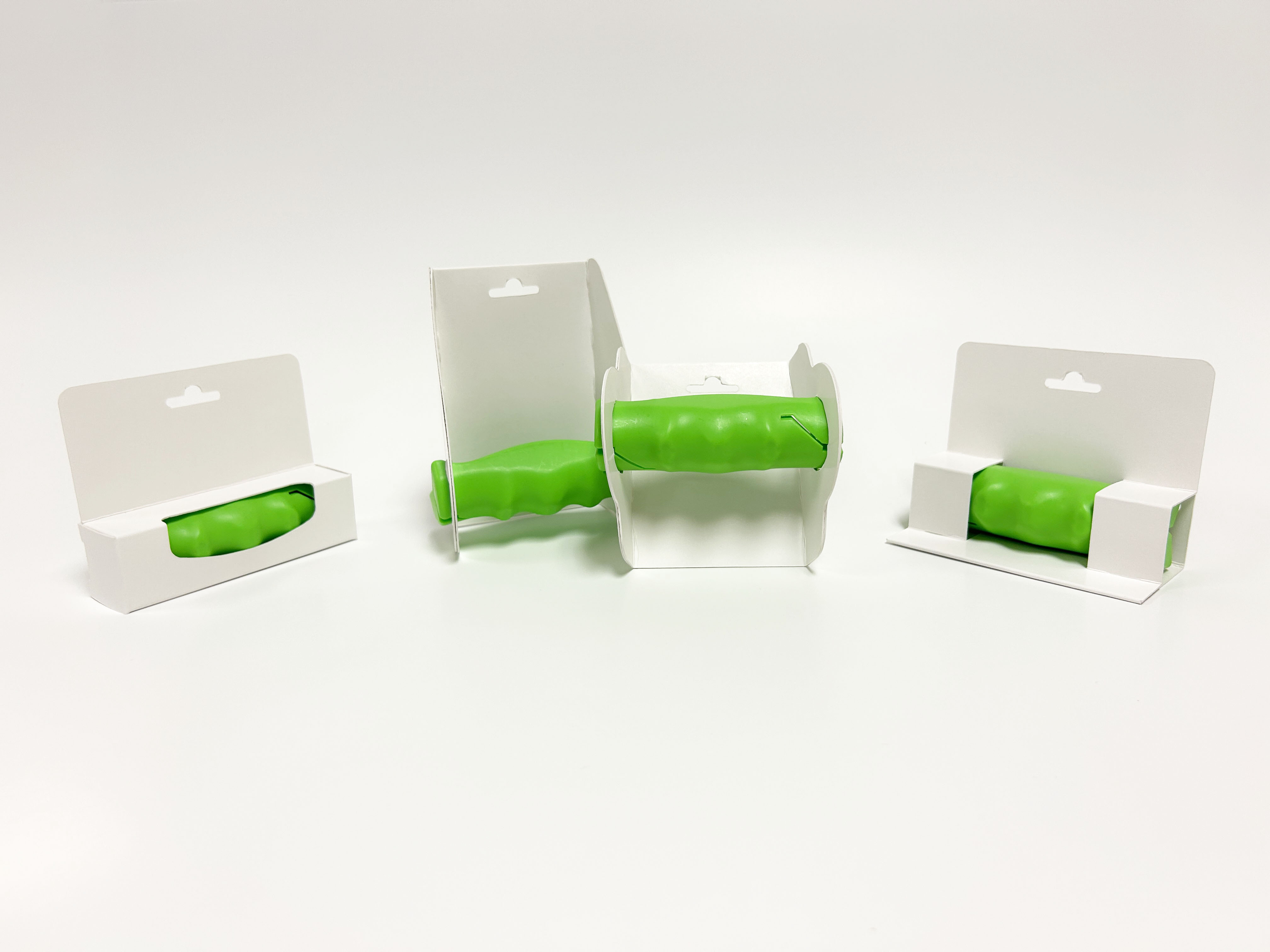
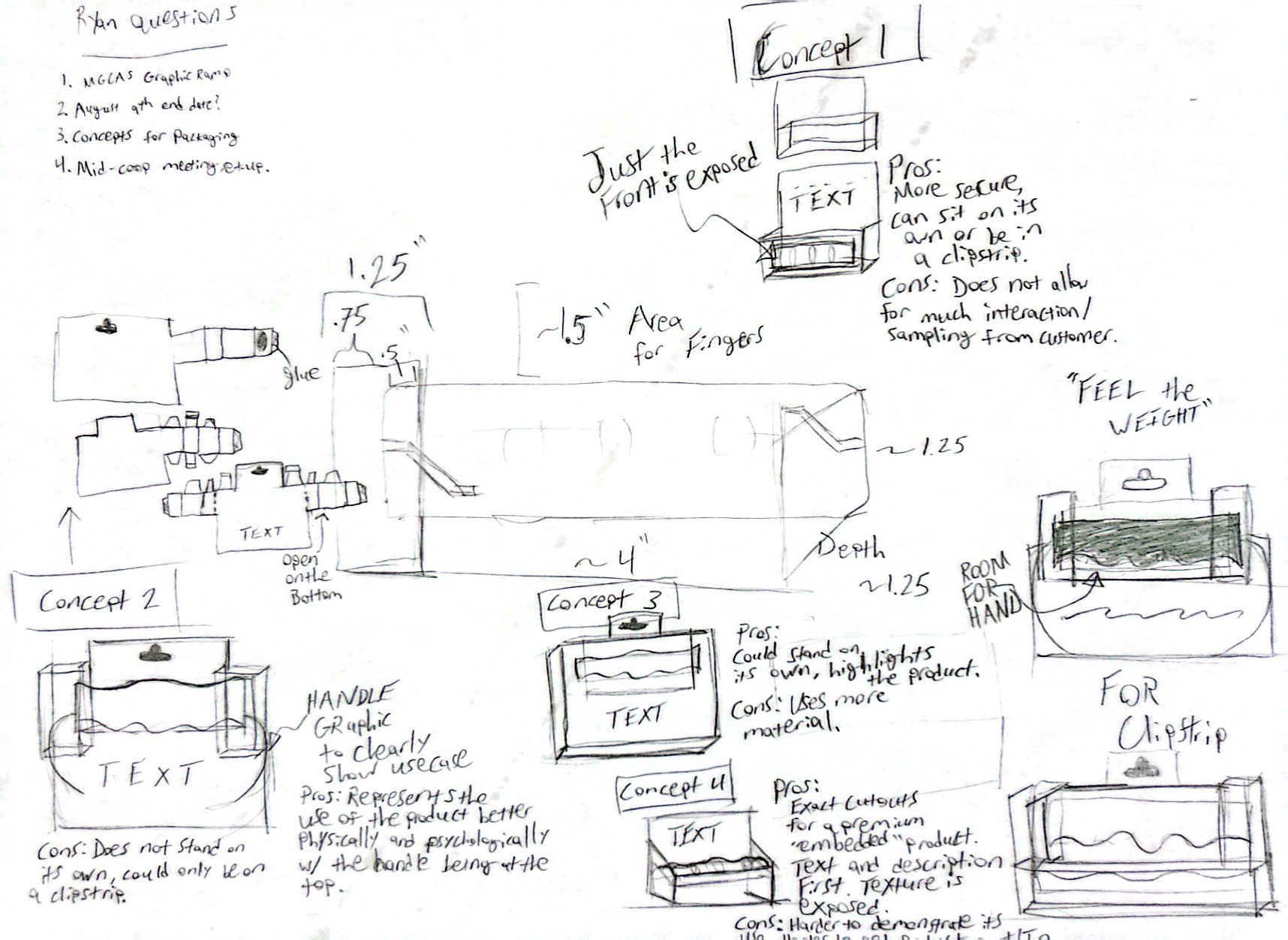
Product is a handle to snap overtop of a paint bucket's wire handle to make it easier to grab.
Criteria:
• secure (tamper-evident)
• allows for interaction with grooves
• area for graphics
Process:
• sketches
• research
• design in Artios CAD
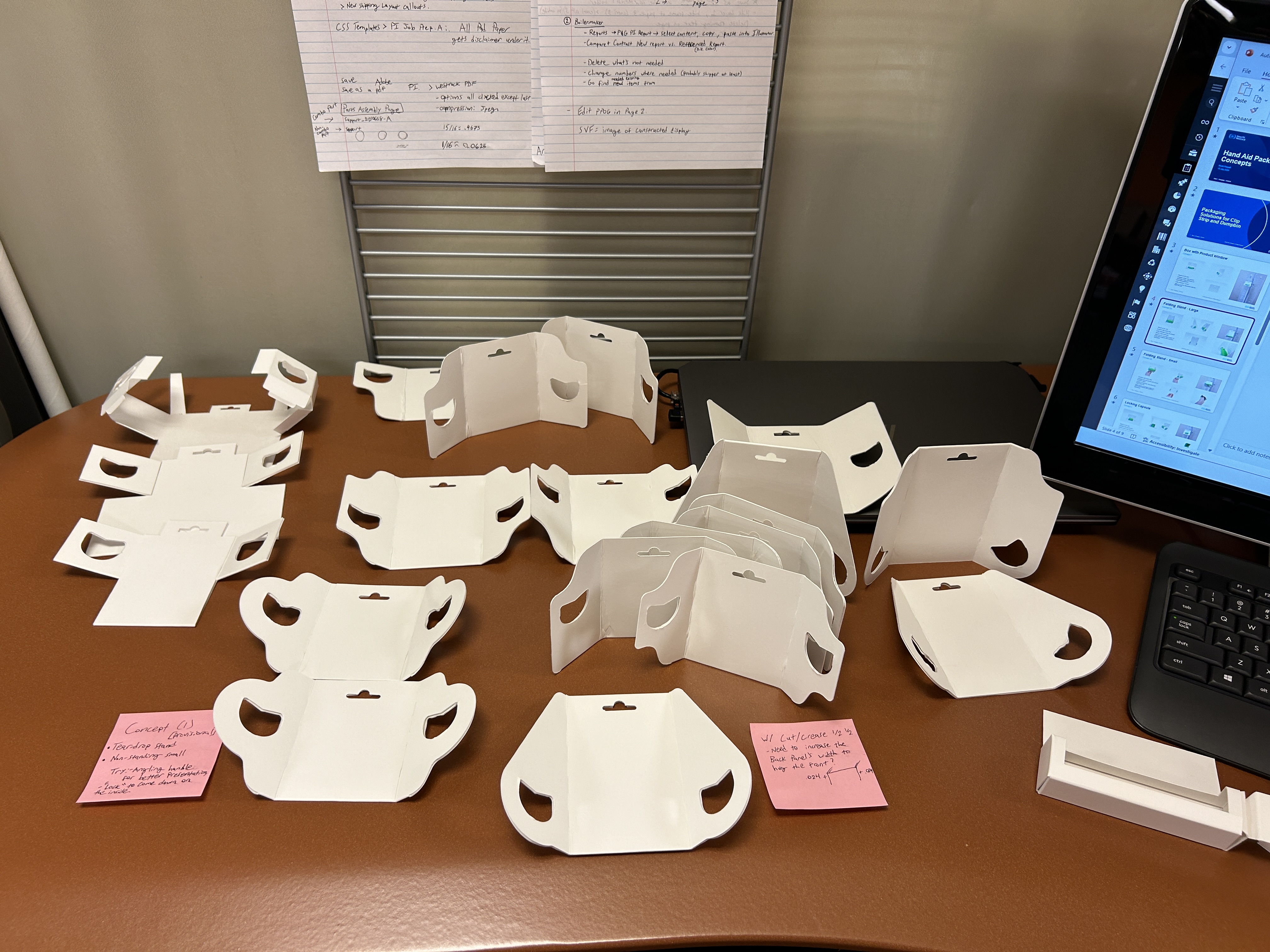
• prototyping (a lot)
• client feedback
• prototyping 2
• client feedback 2
• pallet packing for pricing

Touchland Permanent Endcap Concepts
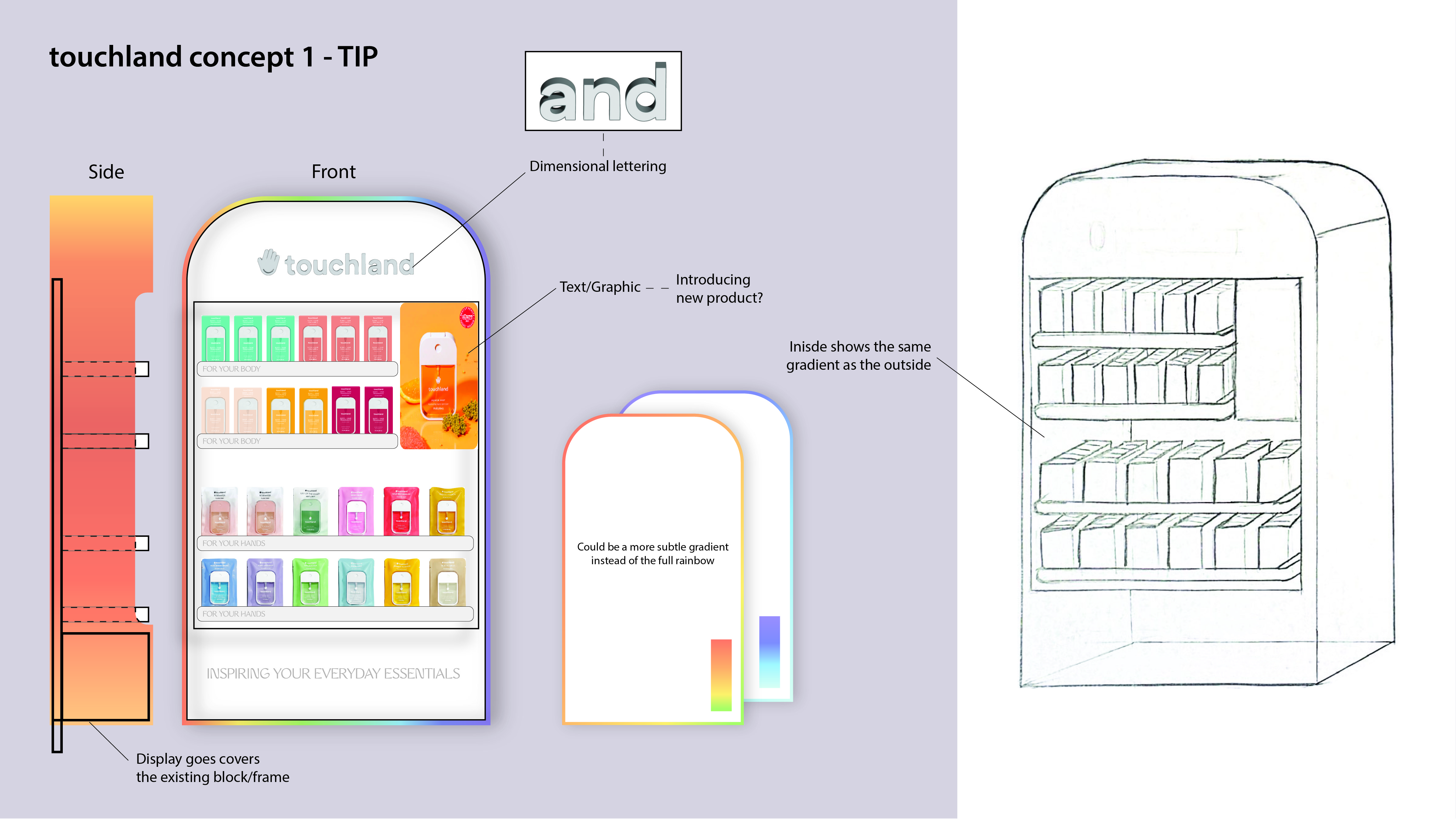
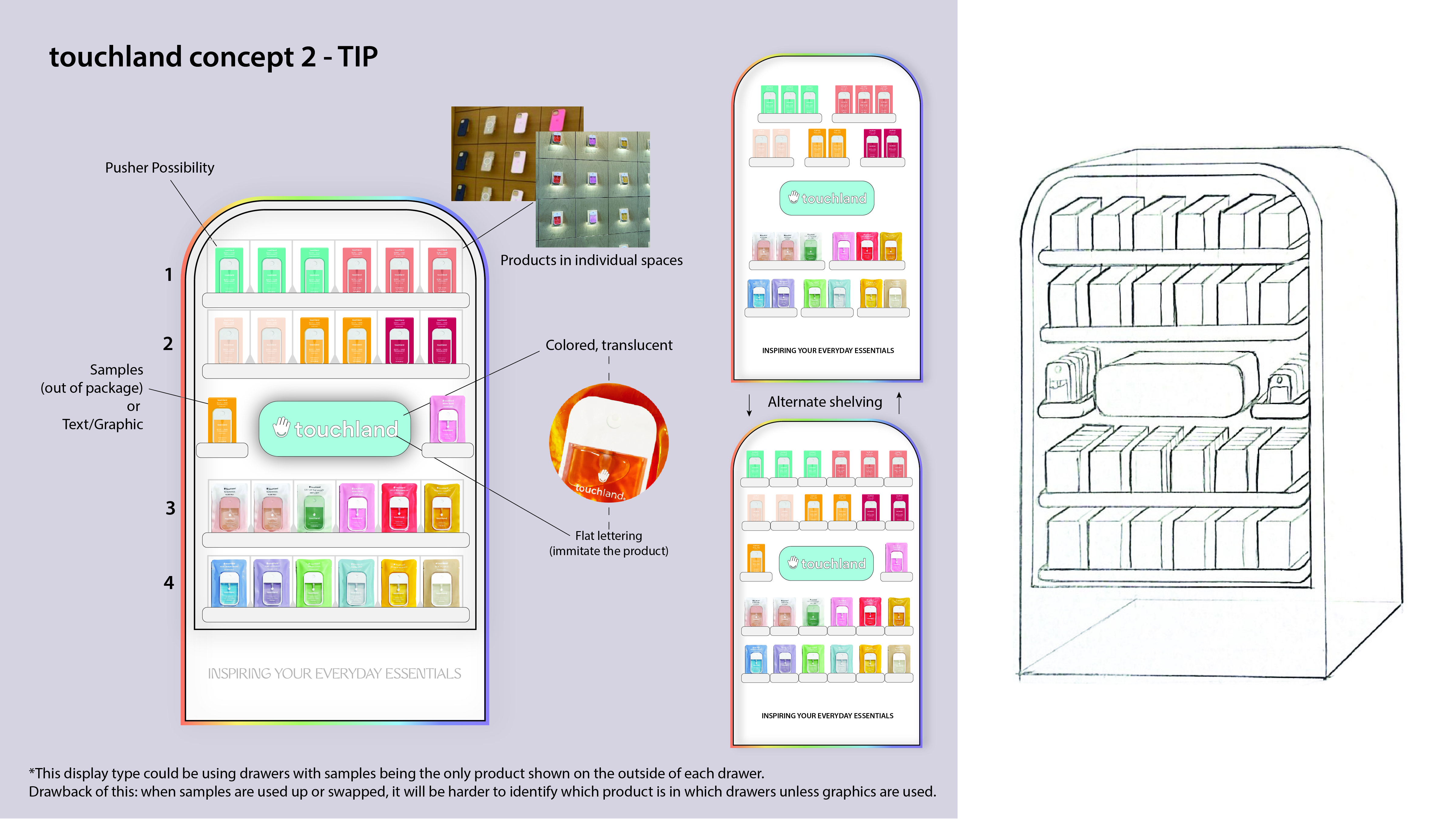
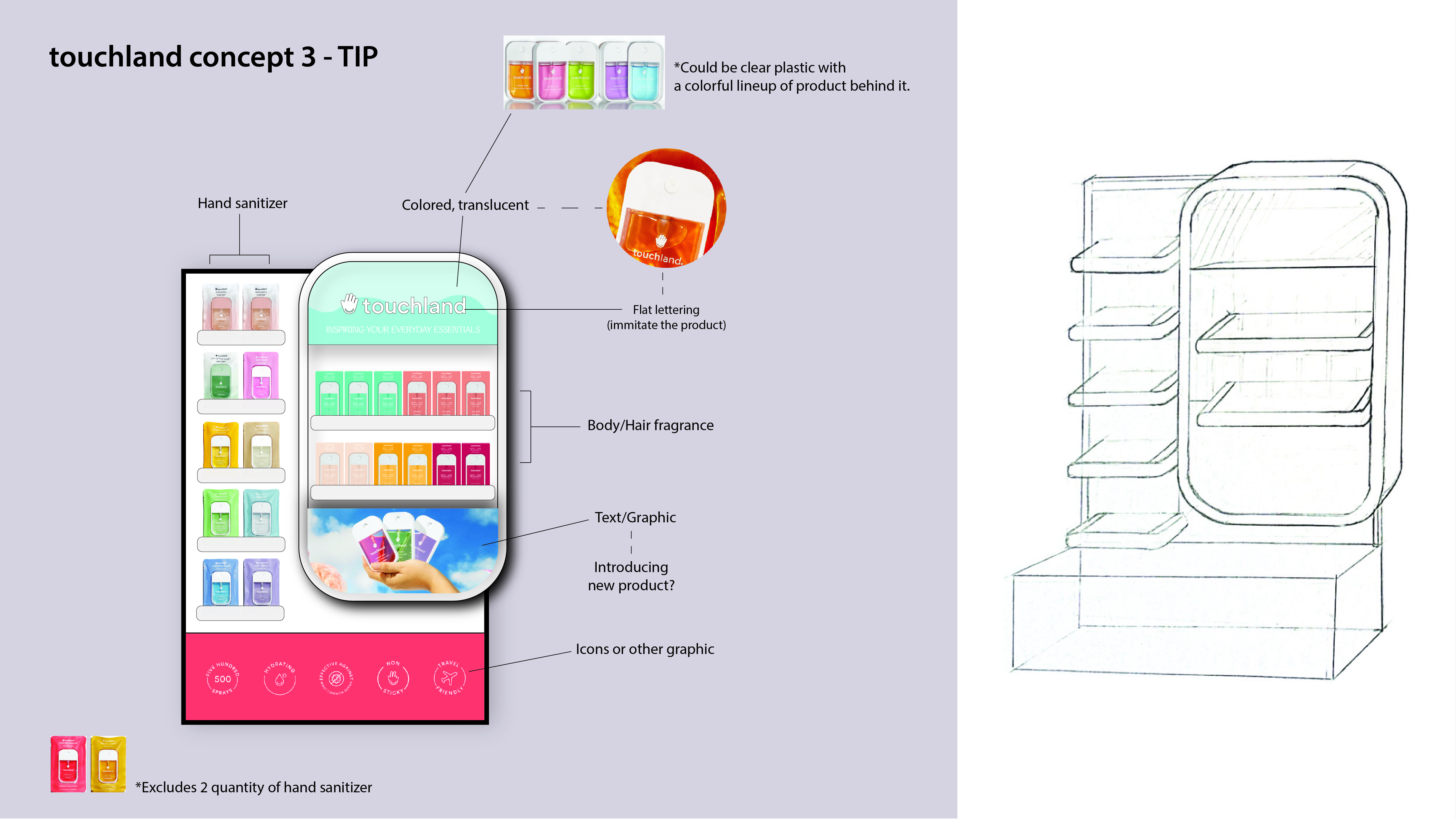
I diagrammed and sketched some concepts that our team presented to the owner of Touchland for a permanent endcap in Sephora that would also be a launch for their new product line.
Head & Shoulders Wing Stand
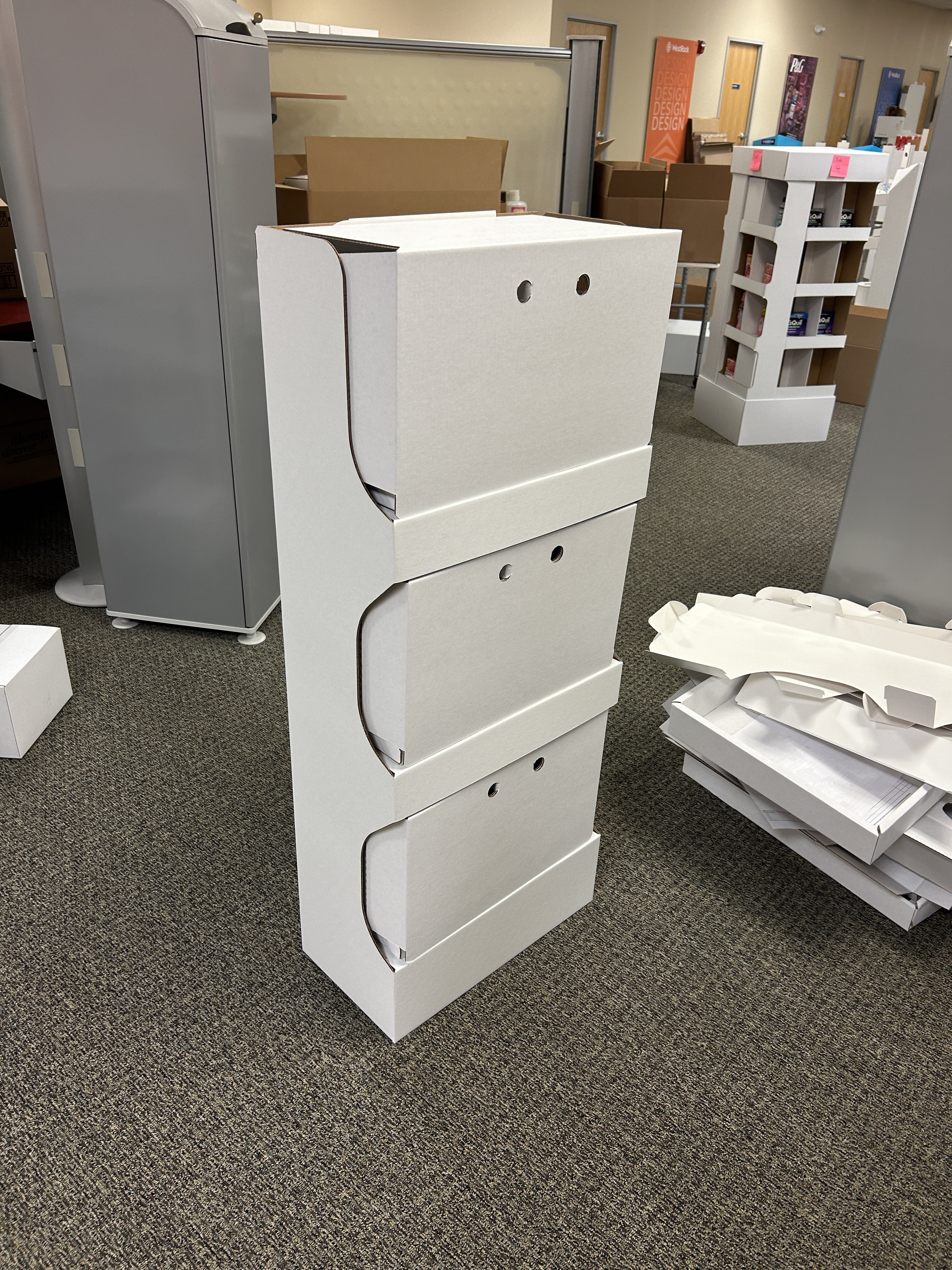
Here is an example of a structure I worked on from start to finish which reached stores in December 2024.
About UC's Groundfloor Makerspace @ 1819
The Groundfloor Makerspace is seperated into two sections: Fabrication (wood/metalworking) and Prototyping (2D/3D printing, laser cutting, sewing).
As a prototyping lab co-op, my daily tasks included slicing + running SLA and desktop/industrial FDM 3D prints; teaching classes on laser cutting, soldering/circuitry, and Fusion 360; assisting people with the 2D plotter; as well as managing the equipment and answering questions as they came.
The projects below were semester-long tasks for the improvement of the space.
3D Print Samples
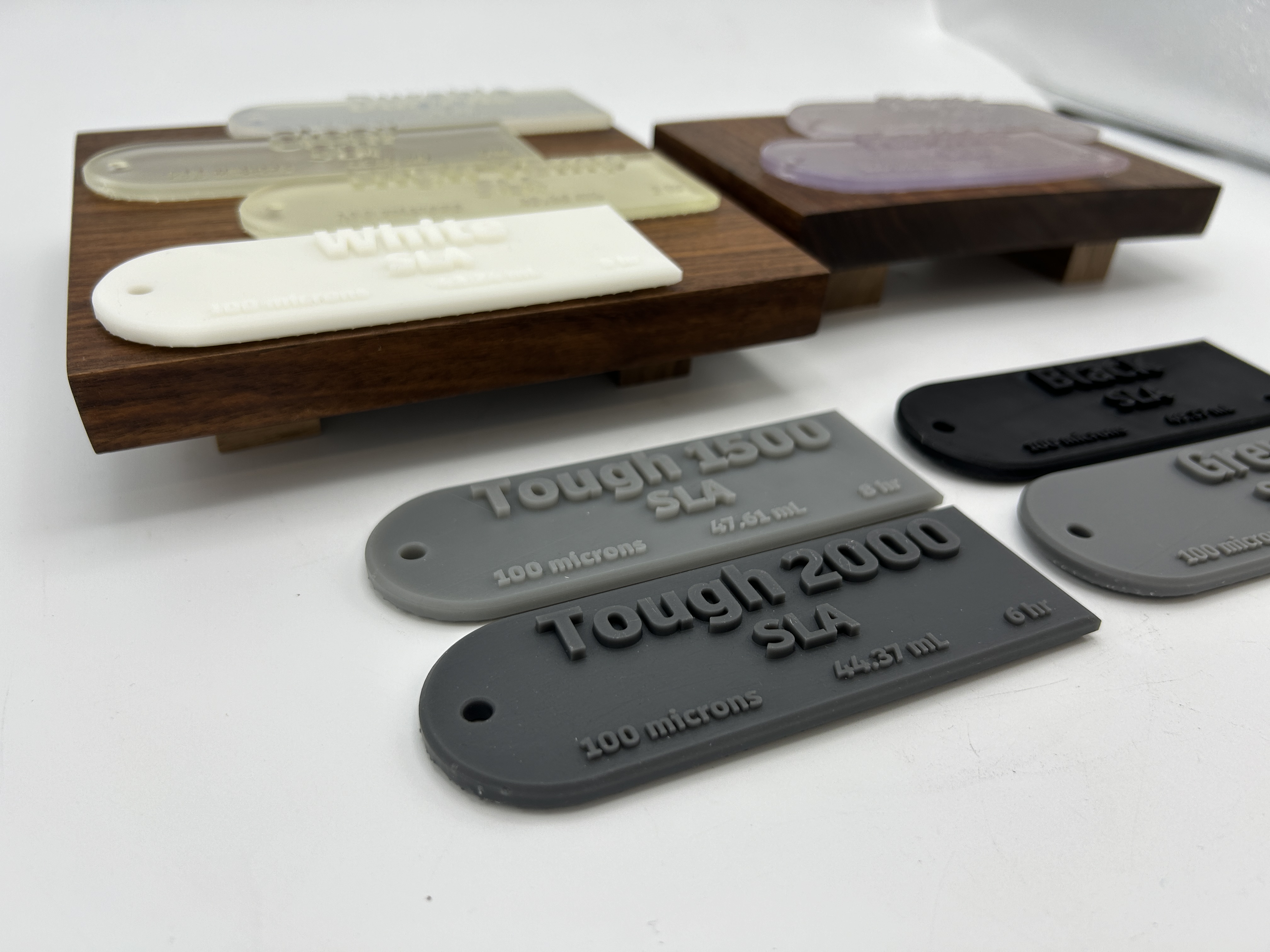
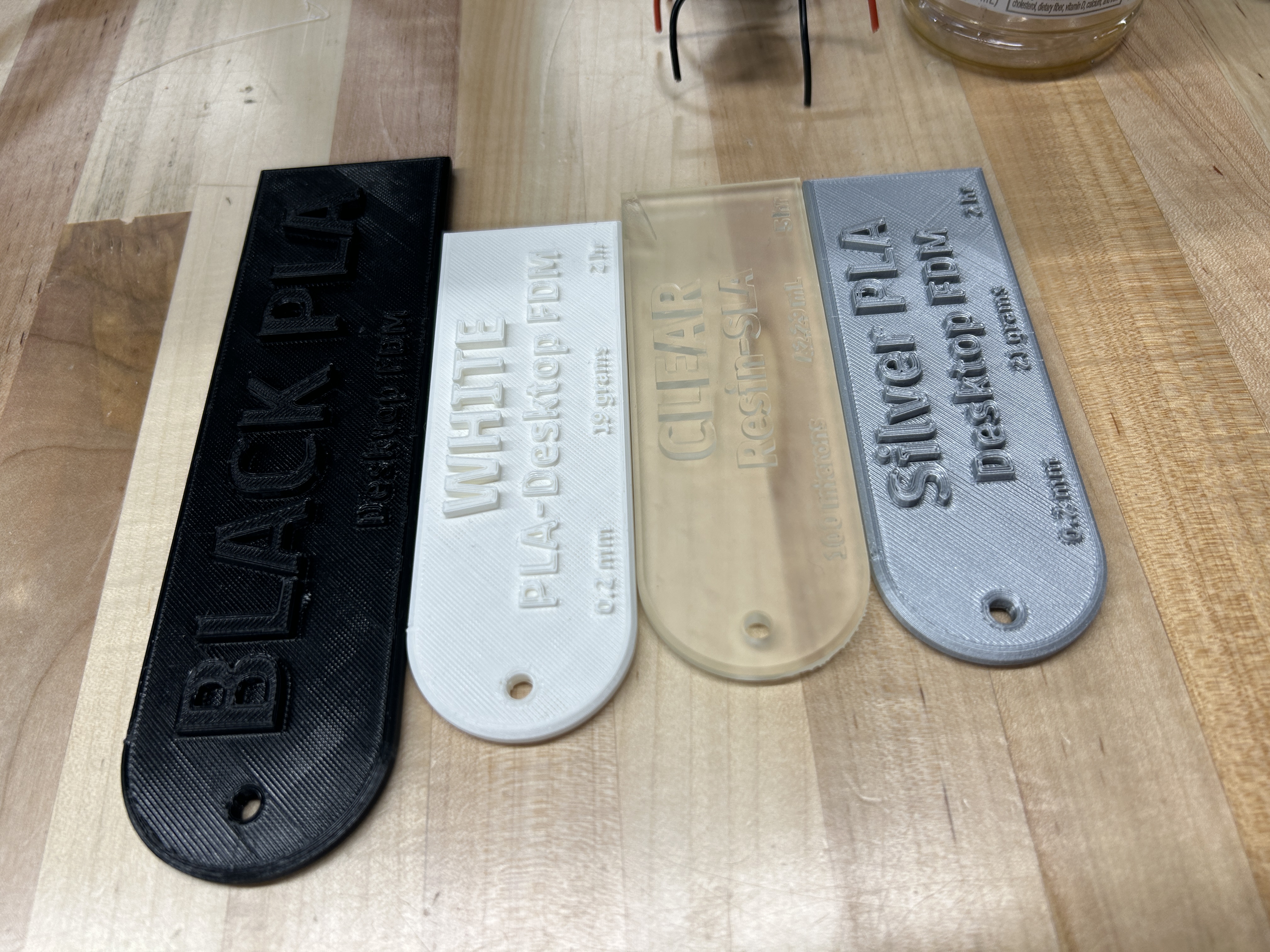
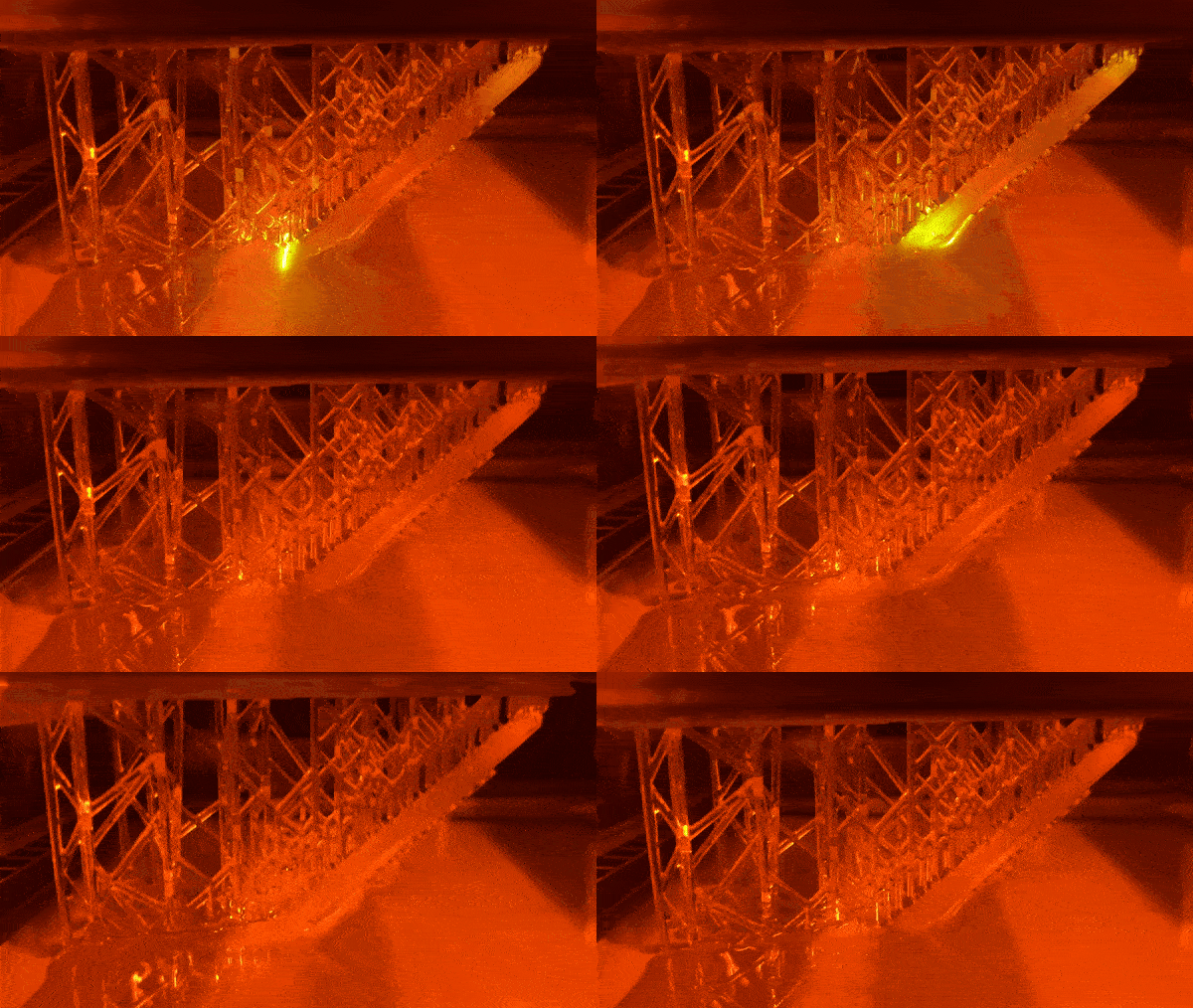
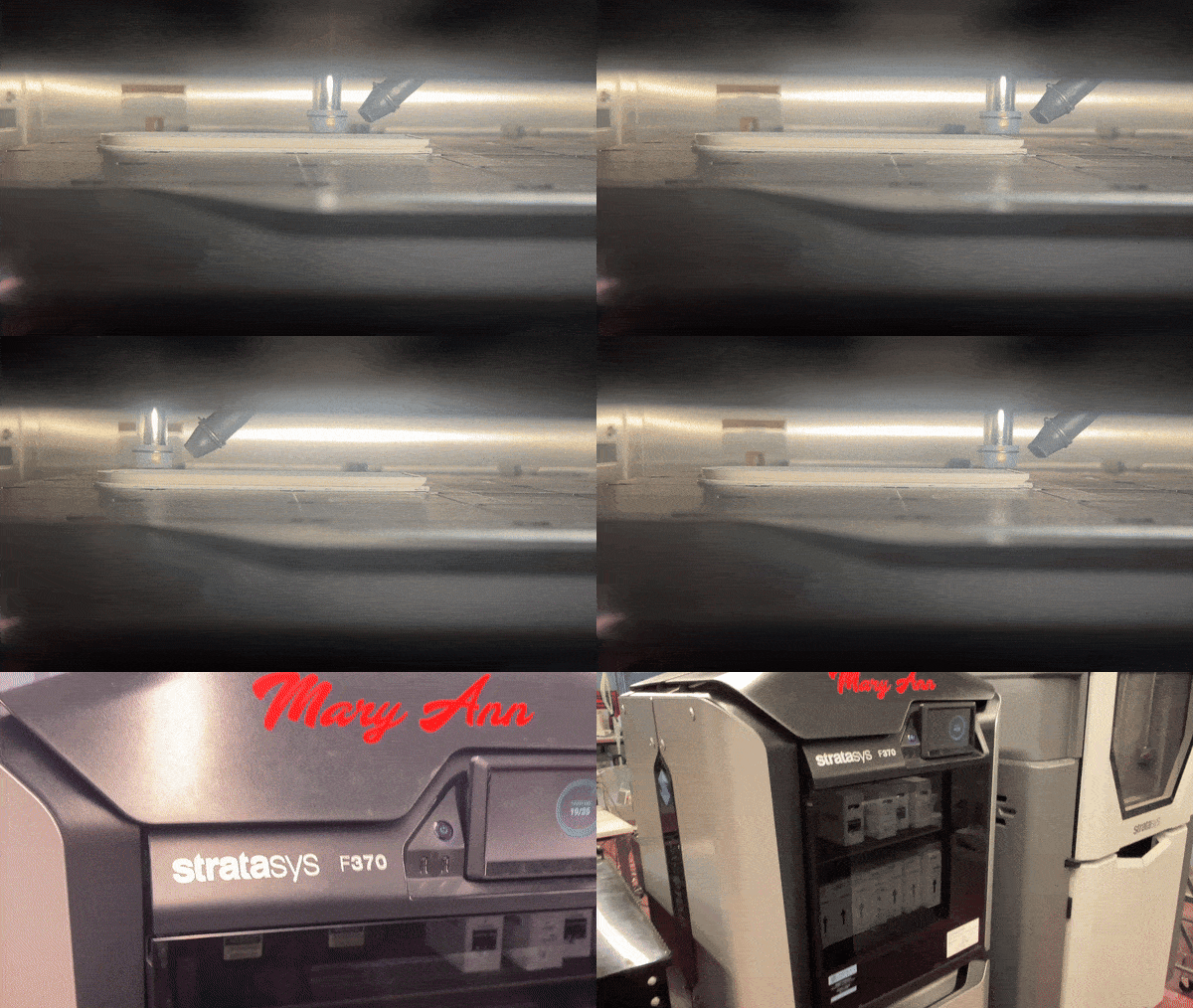
These samples were 3D printed out in every type/color of material the prototyping lab had to offer across SLA, desktop FDM, and industrial FDM printers. With custom details about the printing itself (i.e. printing time and volume of material used), they are meant for educating 1819's visitors on the differences between printing types.
Laser Cutting/Engraving Samples
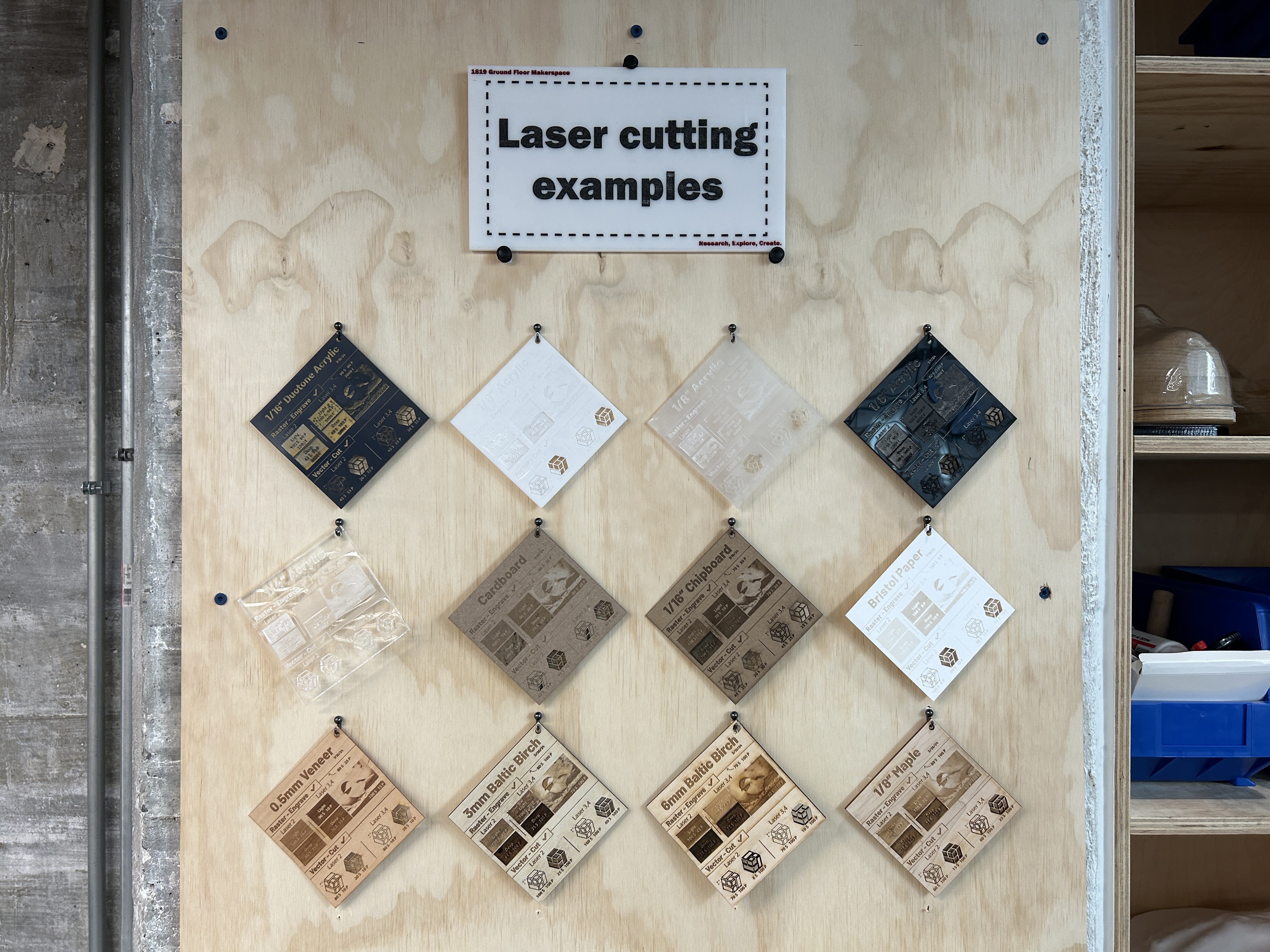
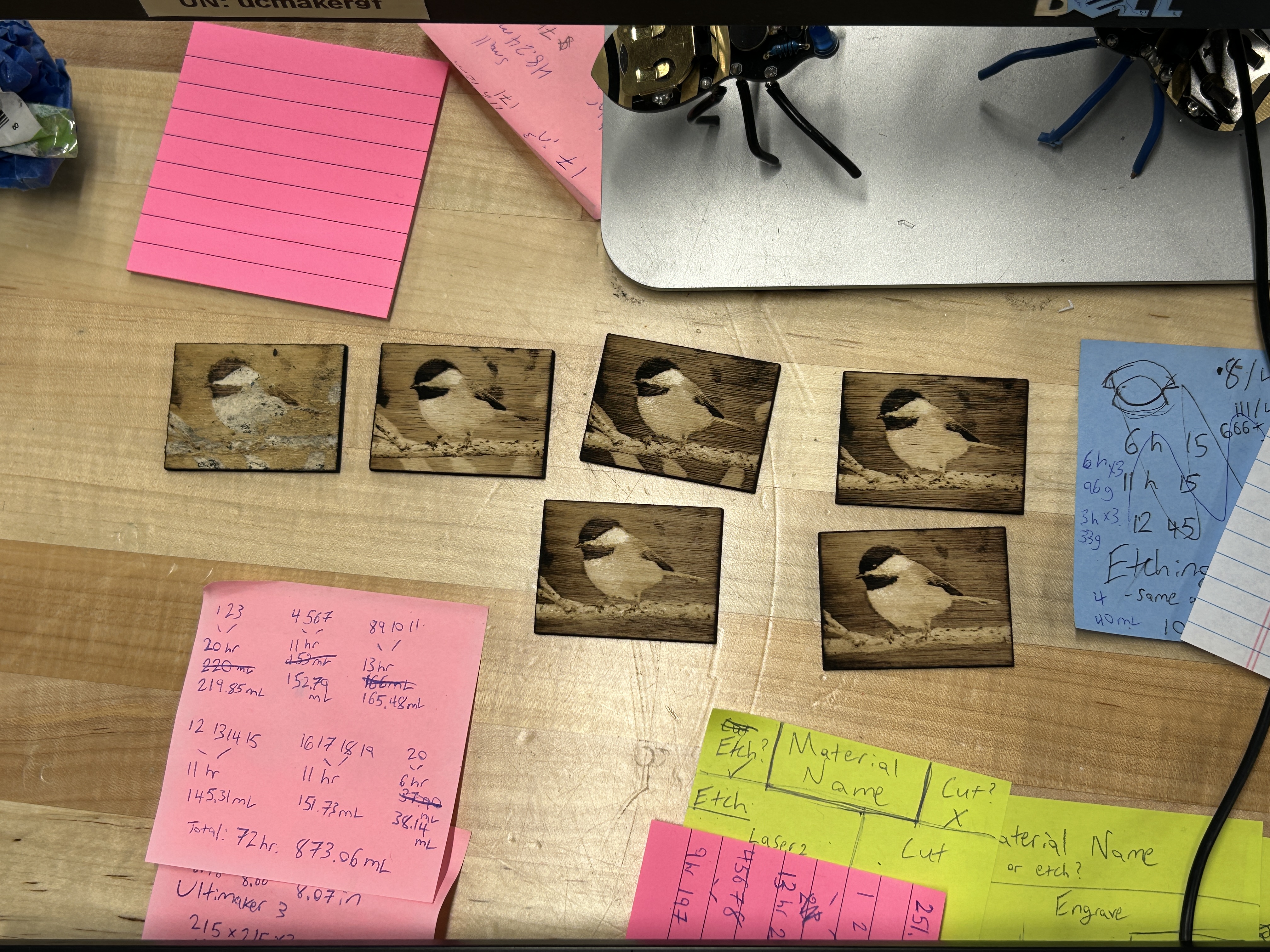
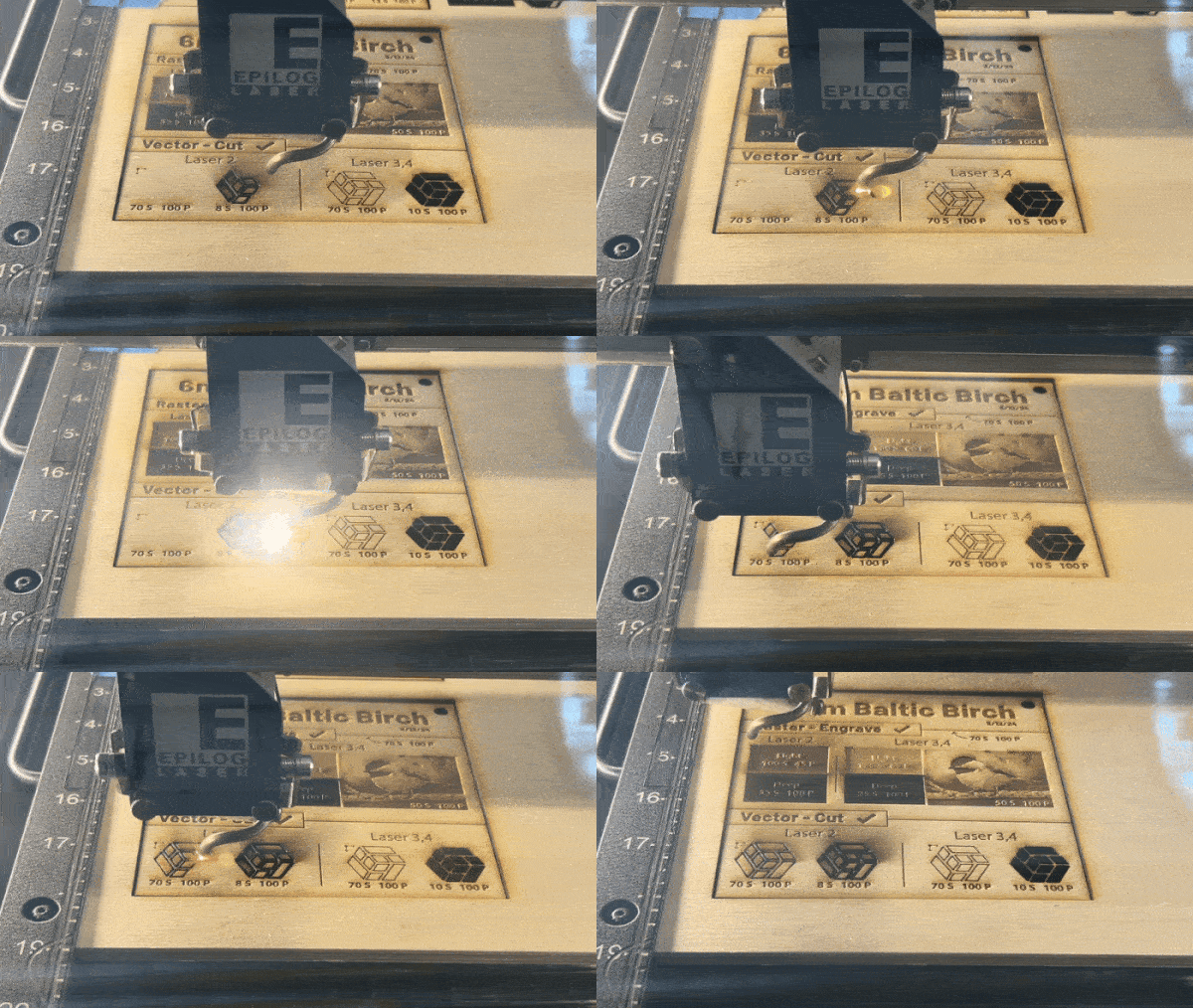
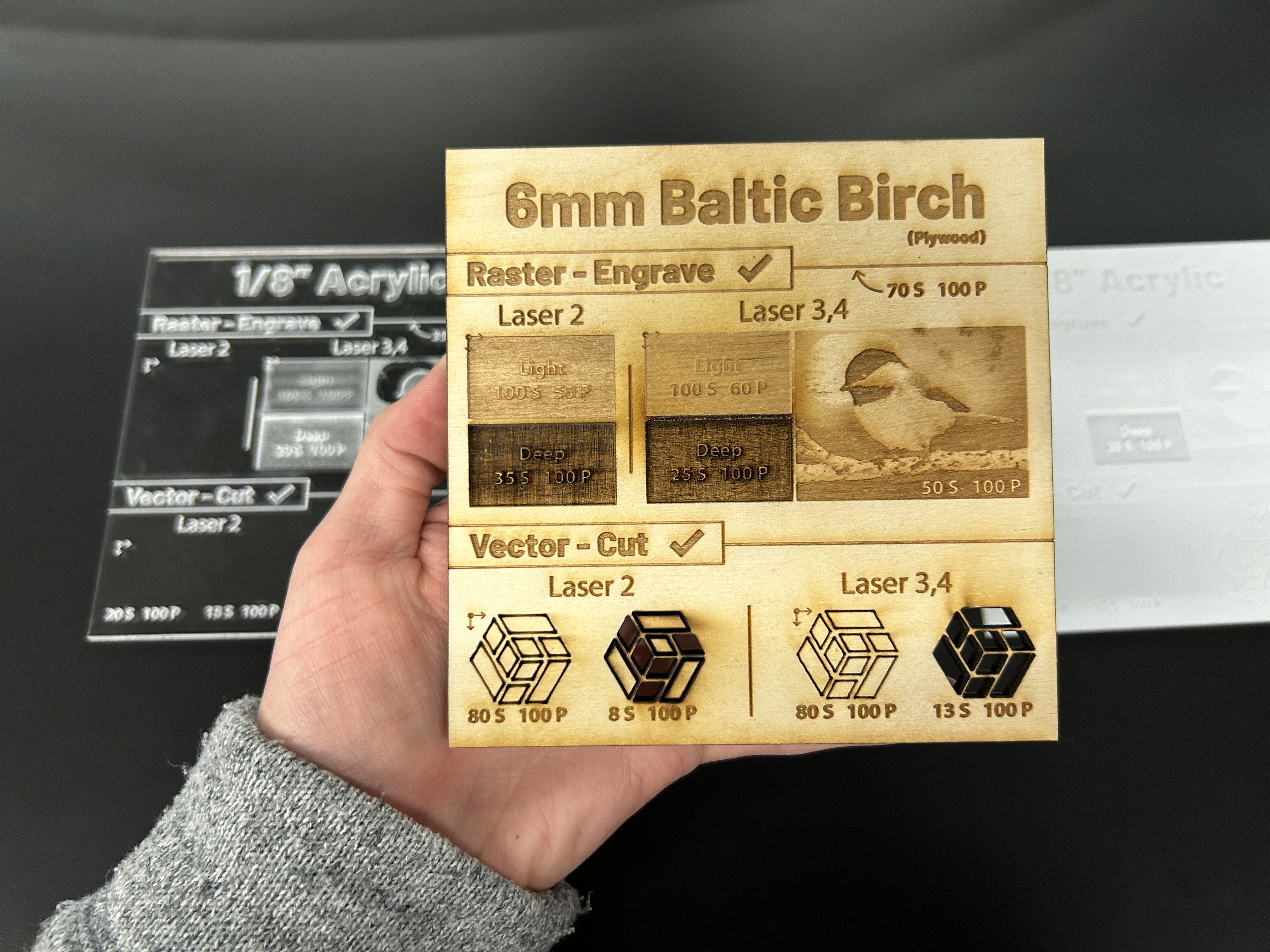
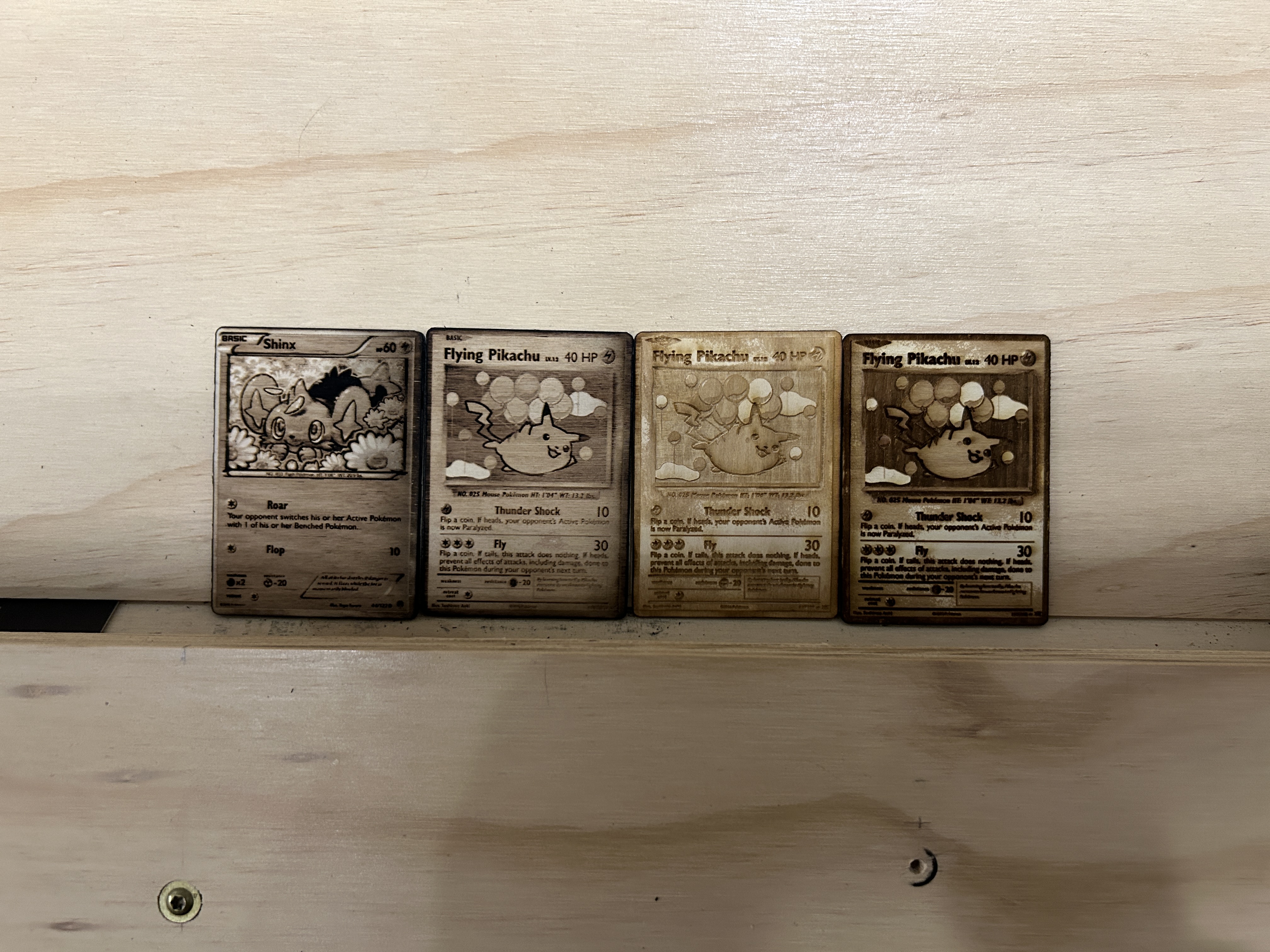
Similar to the 3D print samples, these are meant to serve as examples of the settings required to achieve certain results on the two different wattage laser cutters in the prototyping lab. Since environmental factors and degradation over time have an effect on the power of the lasers, these serve as an important benchmark for a lot of the different materials suitable for the machines, and my template and instruction sheet can be used to quickly make new samples when needed.
Extras
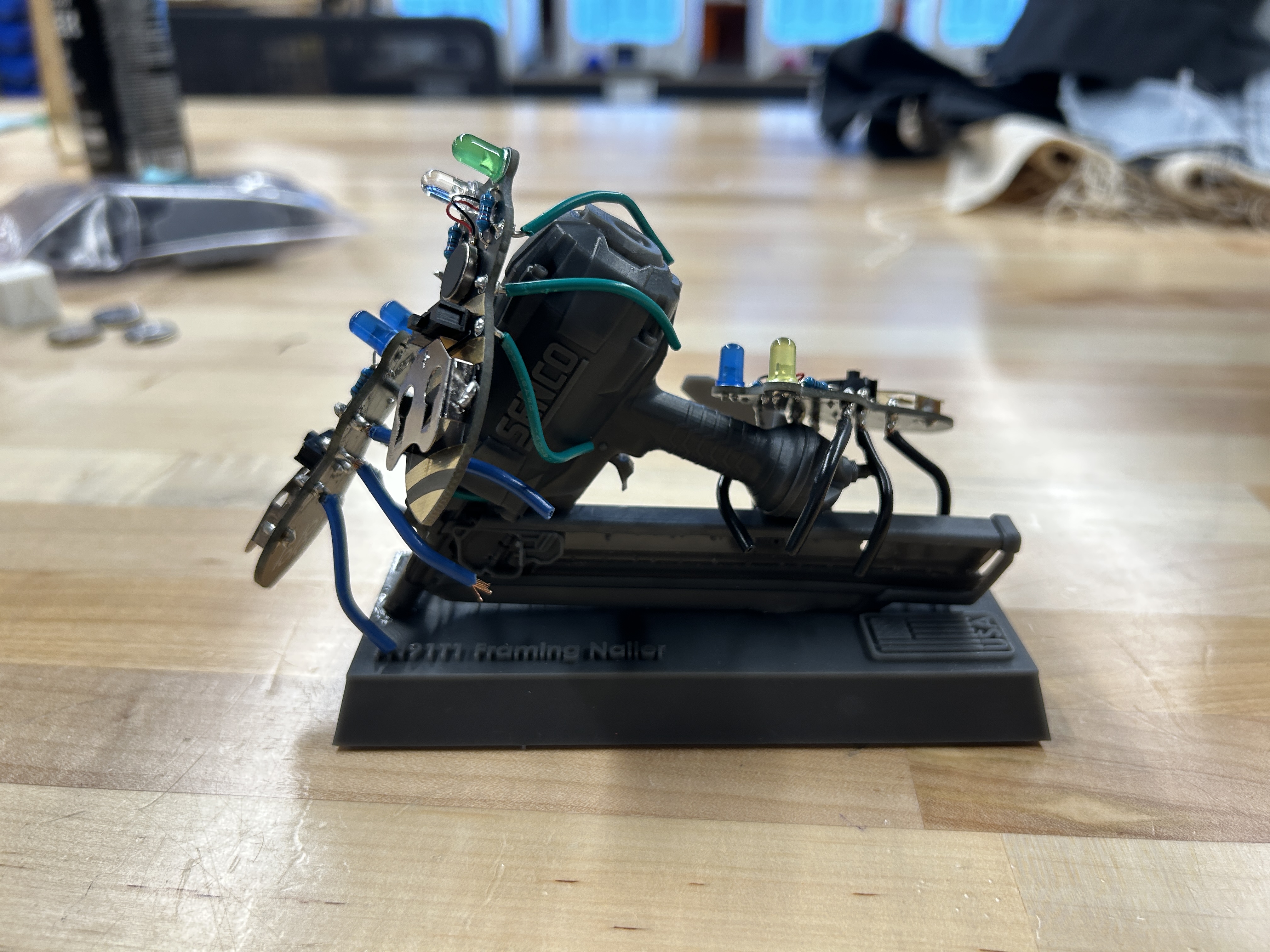
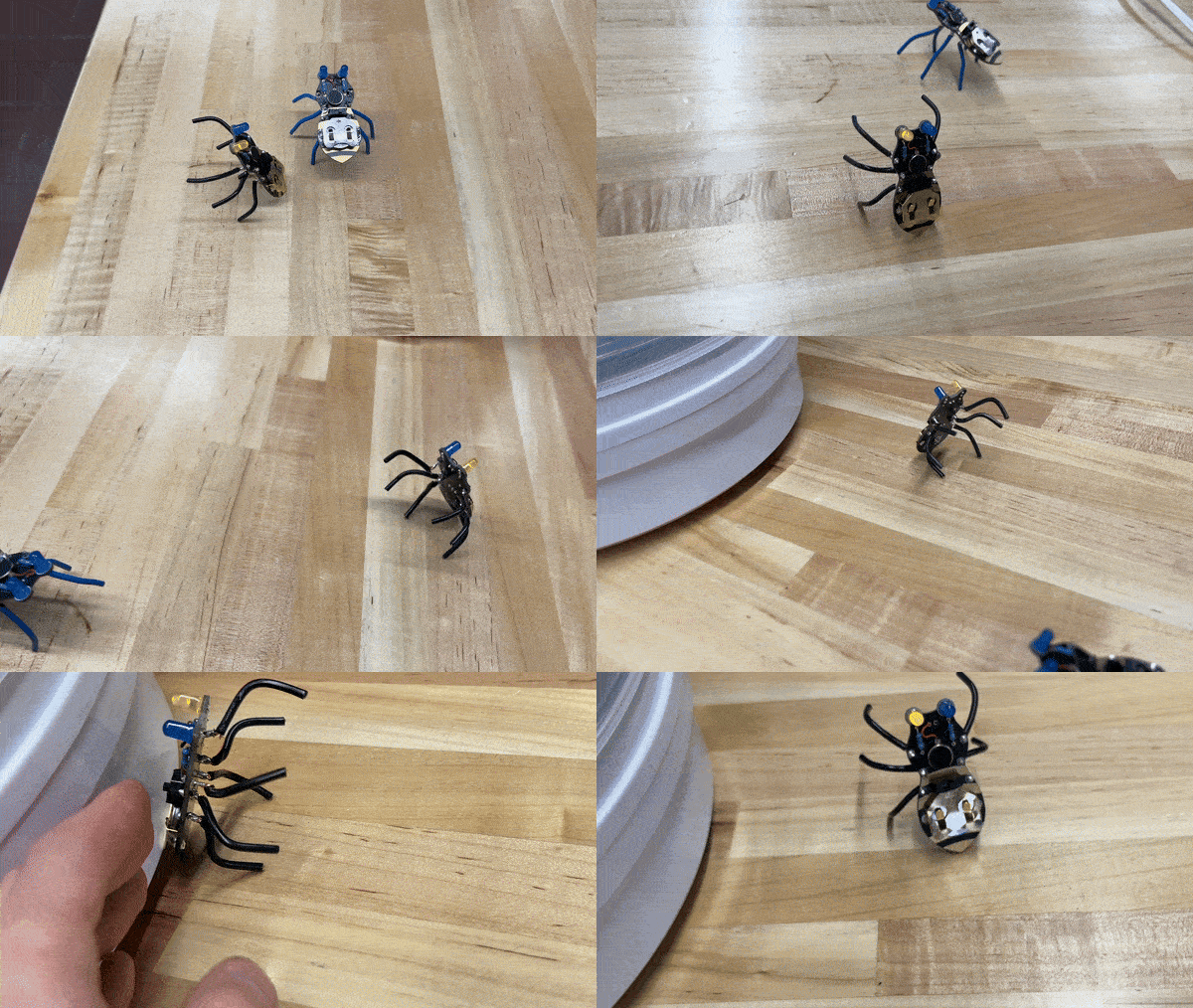
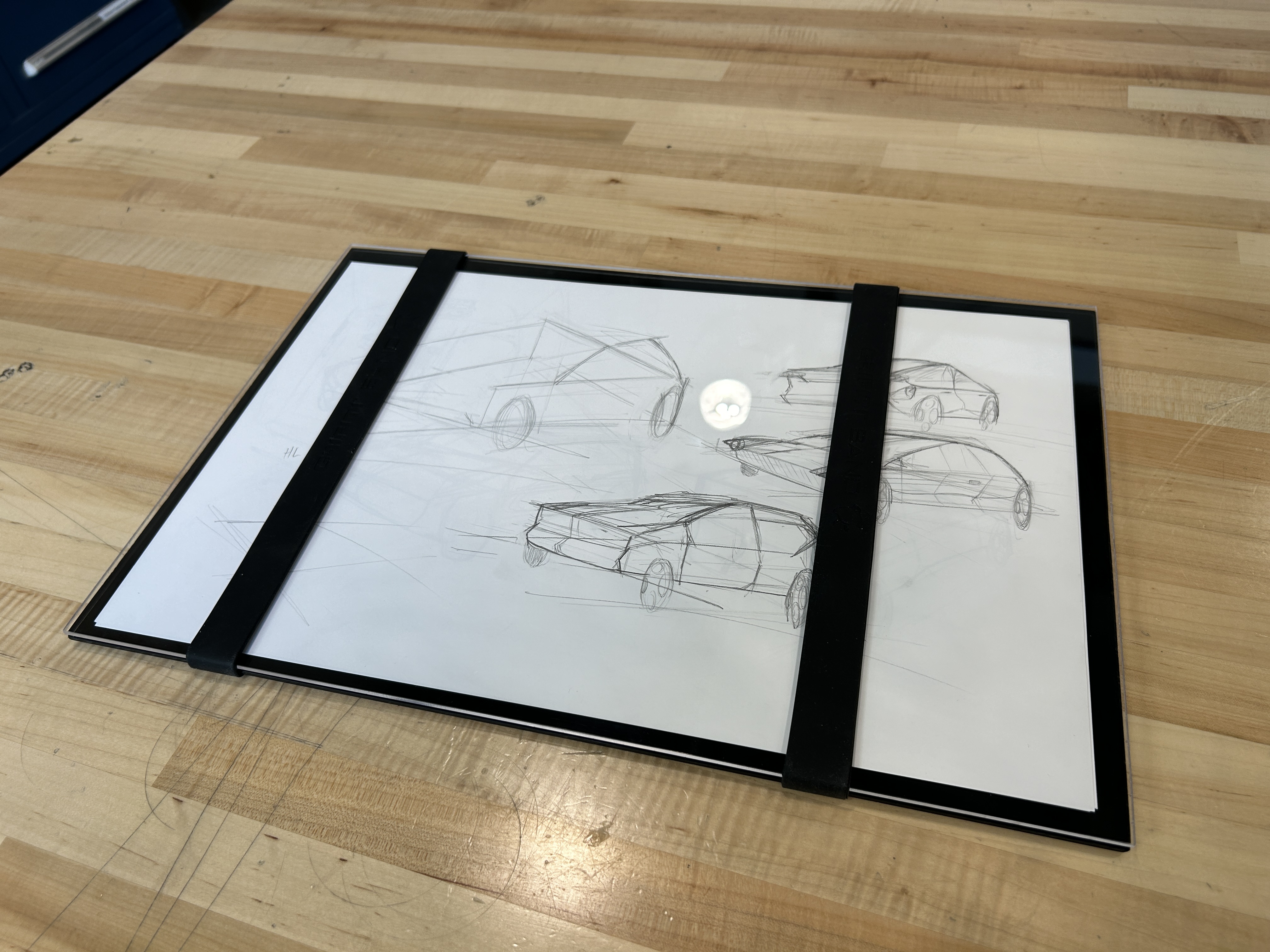
I made a lot of circuit bugs for practice and throughout my experience when teaching the soldering and circuits workshop.
I also led a one-time EVA Foam Lantern Workshop around spooky season, but I don't seem to have a photo of one. :(
About American Woodworking
American Woodworking is a turnkey metal and wooden fabricator for the hospitality industry.
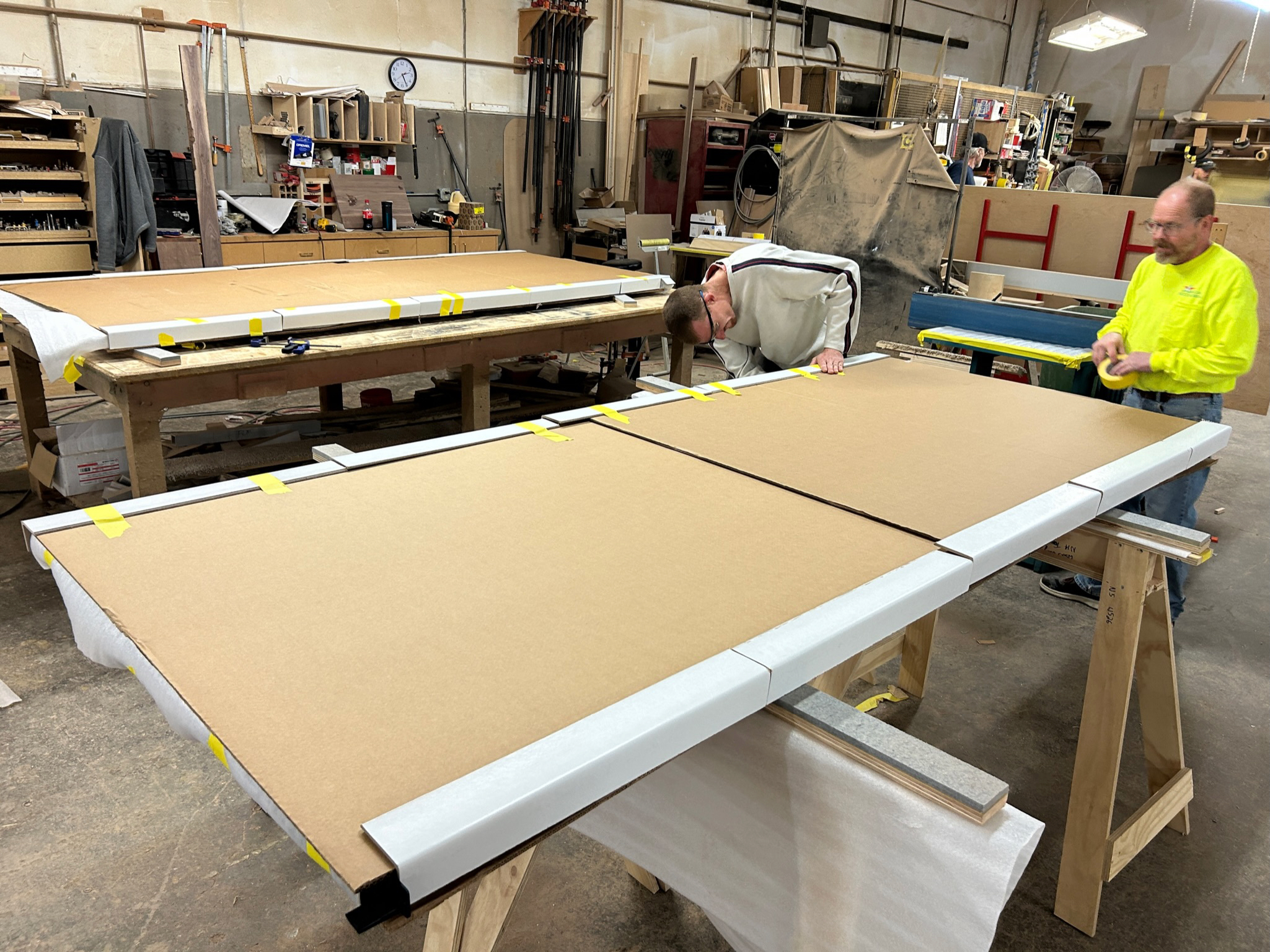
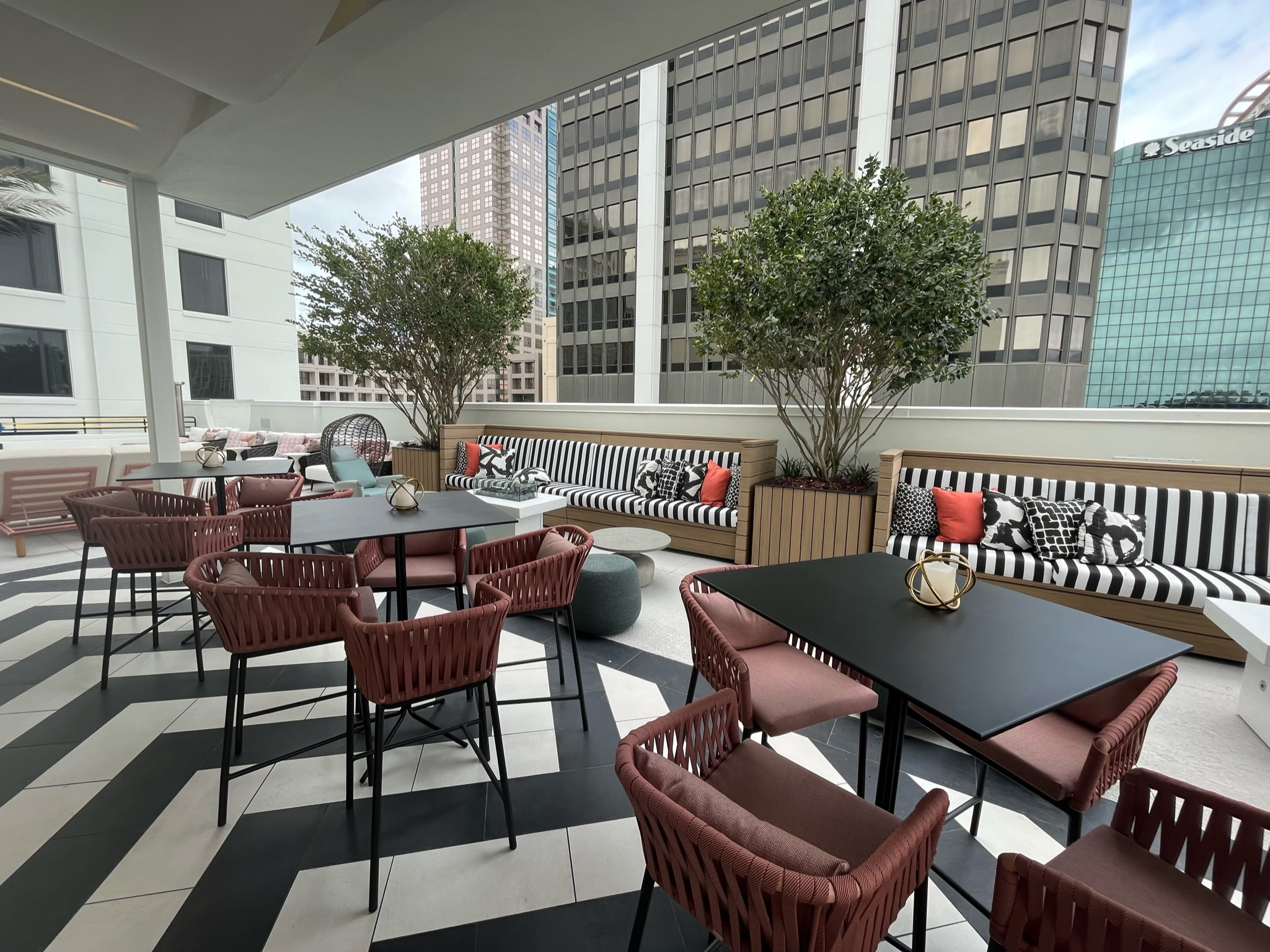
I played a large role in buidling the three projects below during my time there, all installed in the Orlando Grand Bohemian Hotel. I also helped other projects along where I was needed, including packing projects to ship, helping troubleshoot Fusion for CNC setup, and redesigning/publishing their website. Check that out here or see it in my projects!
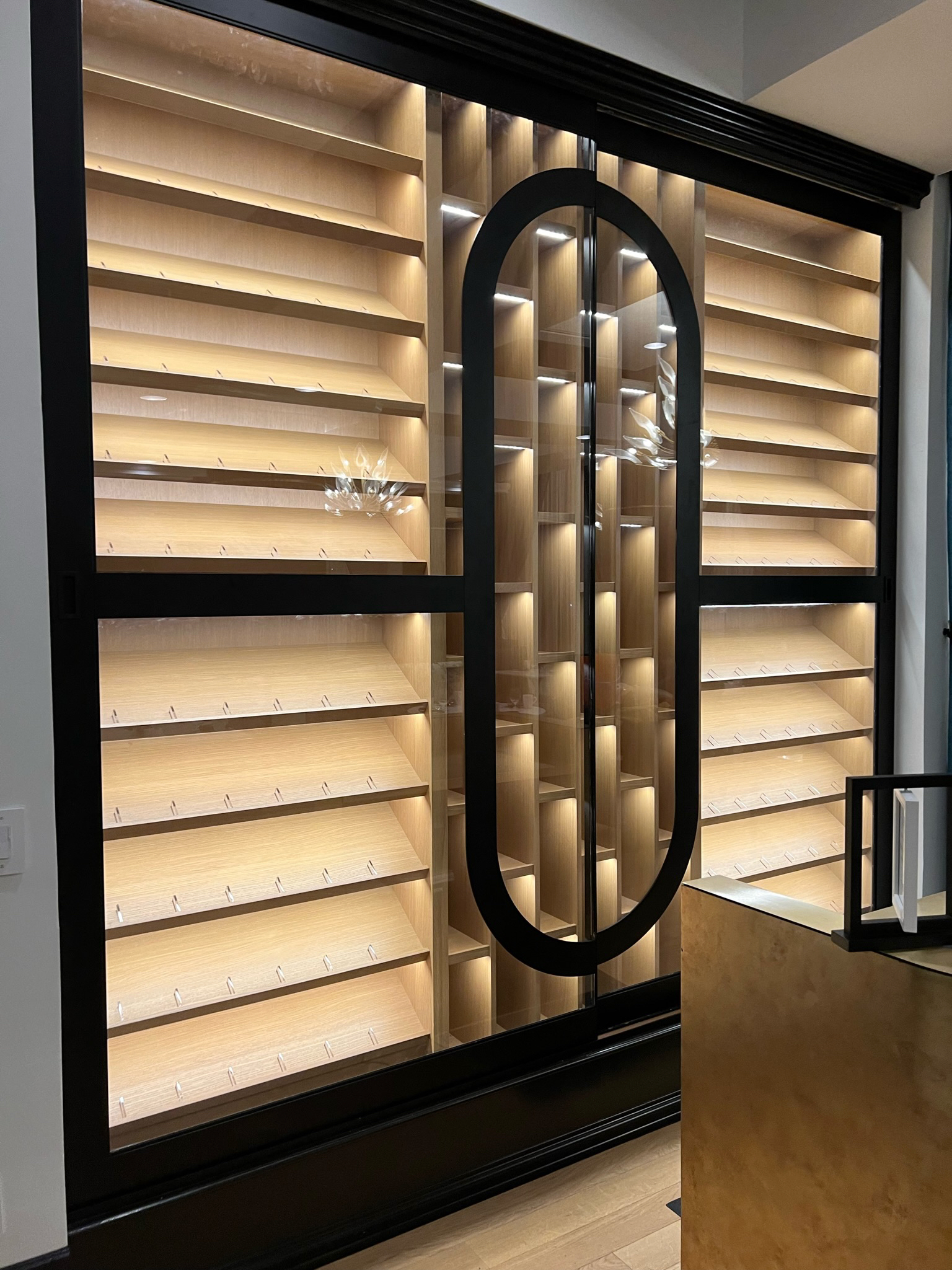
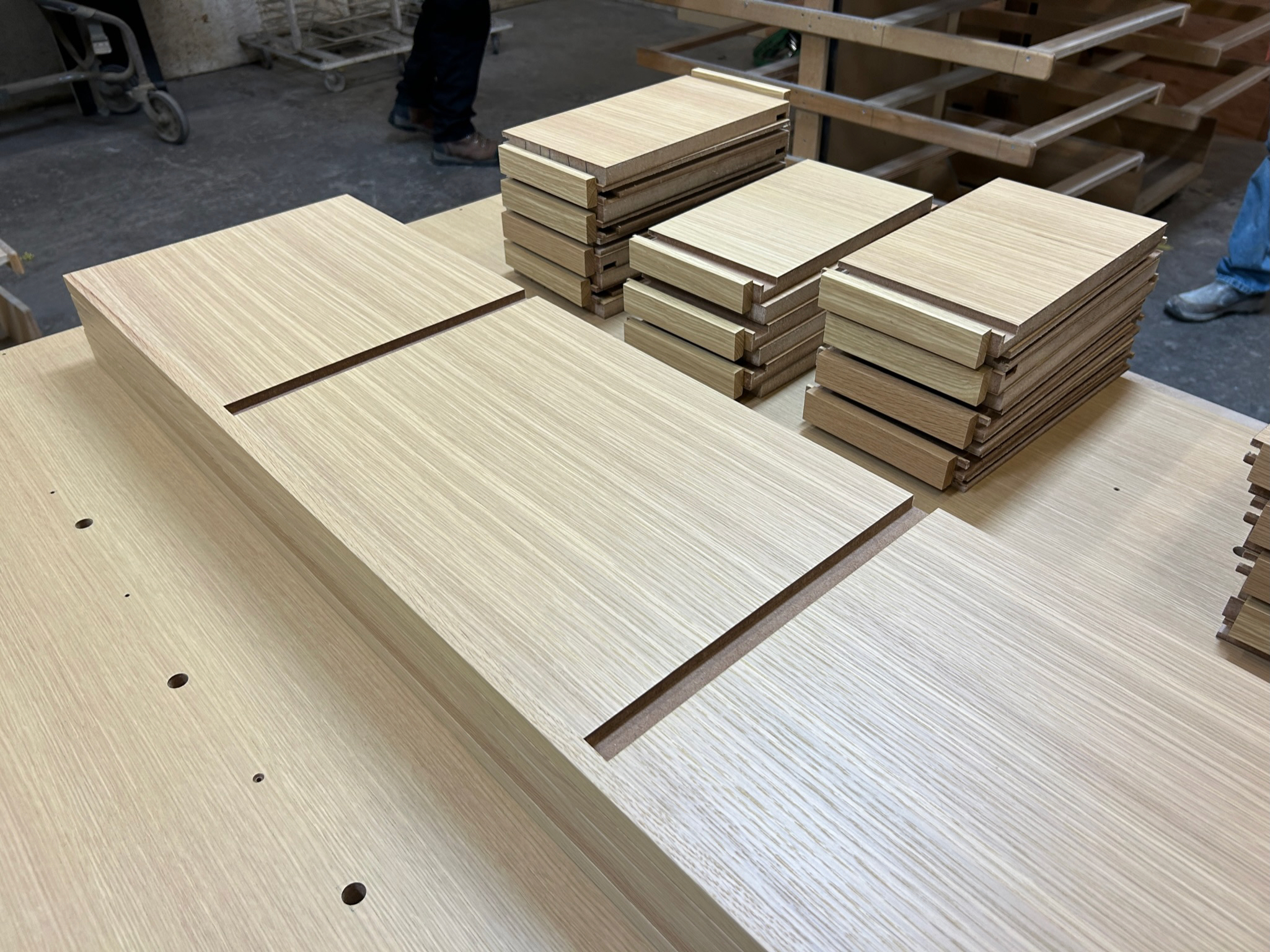
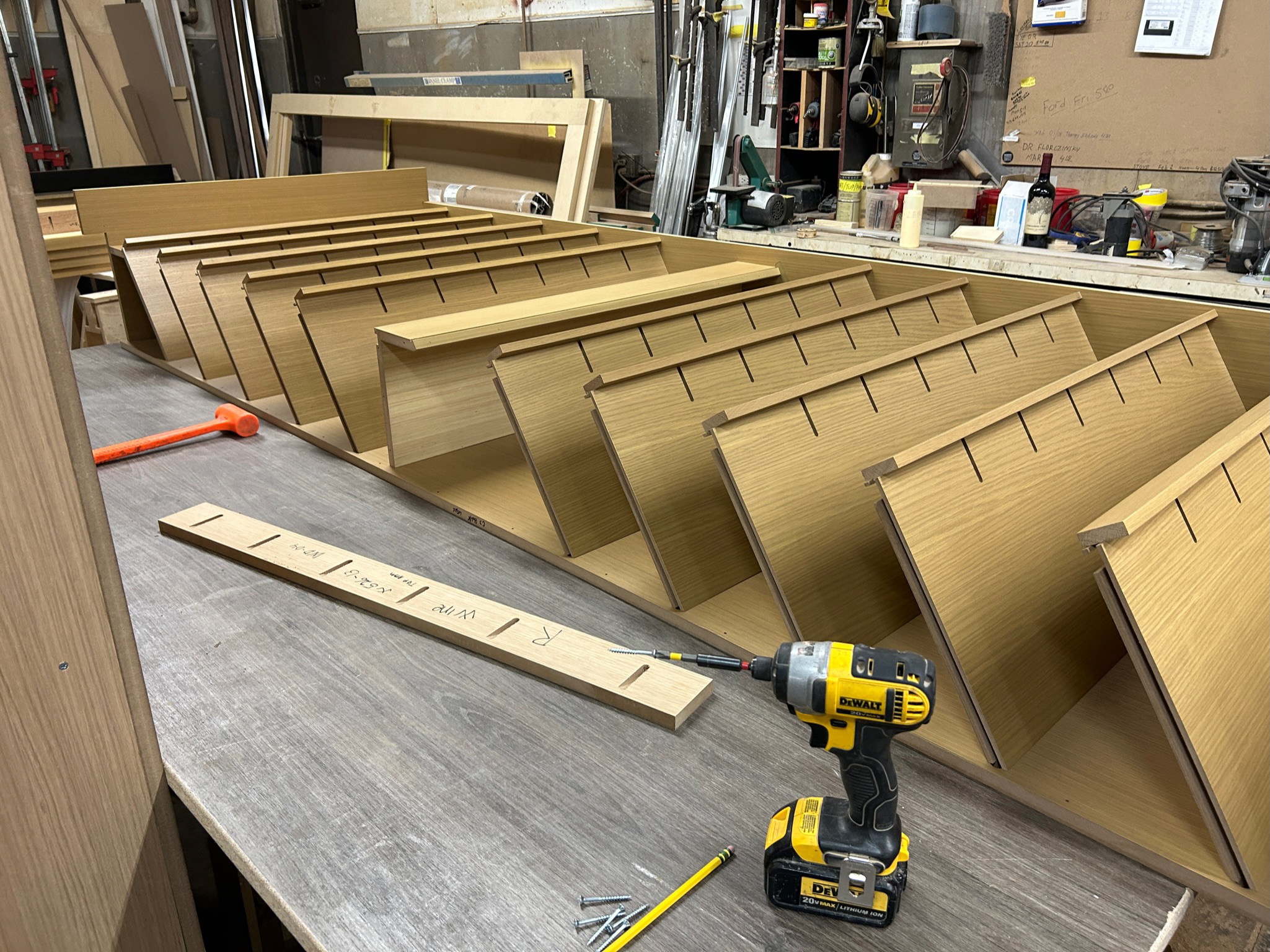
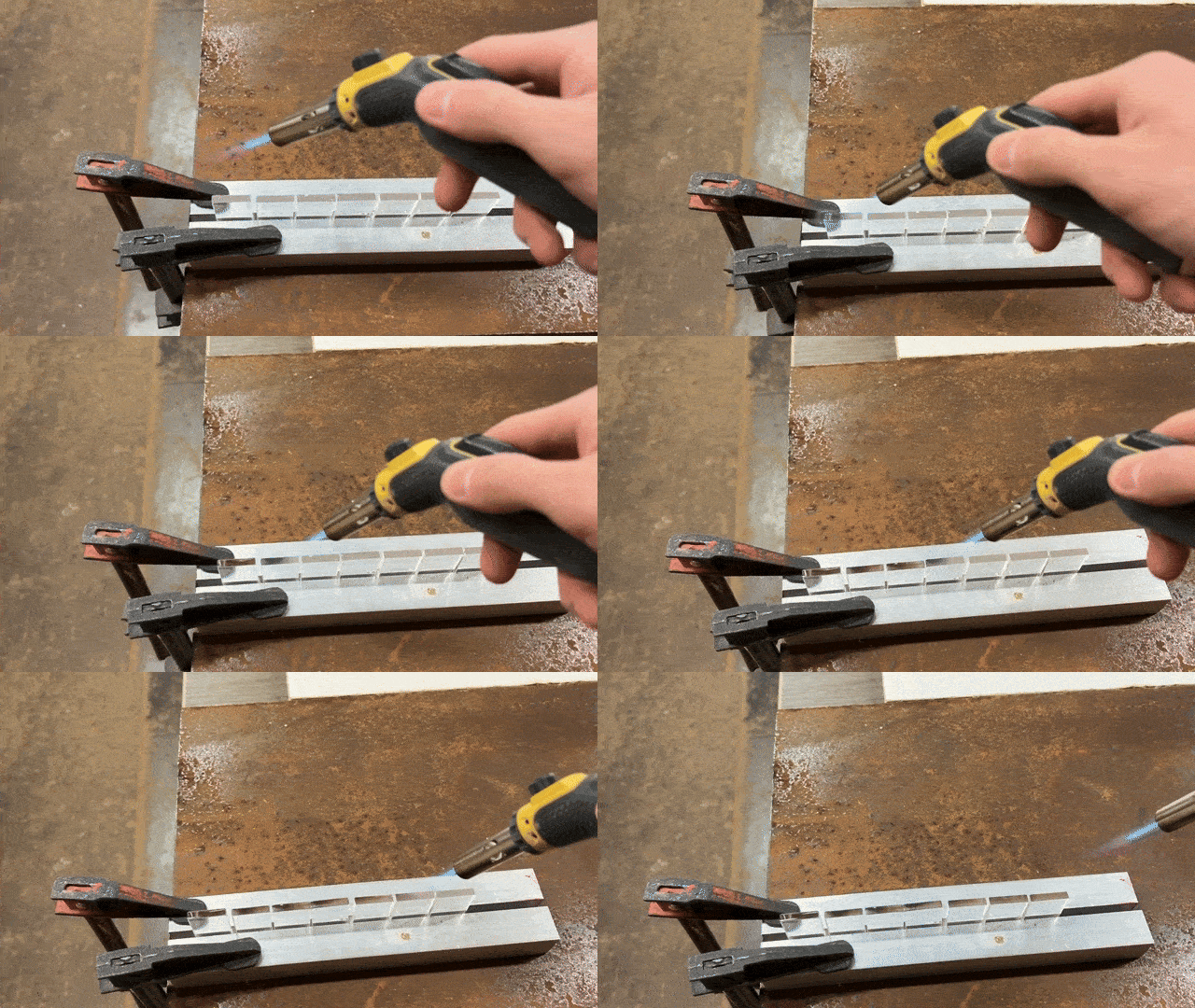
Wine Display
• white oak
• illuminated shelves
• plexiglass dividers
• removable middle shelves
• sliding glass doors
• CNC routed panels
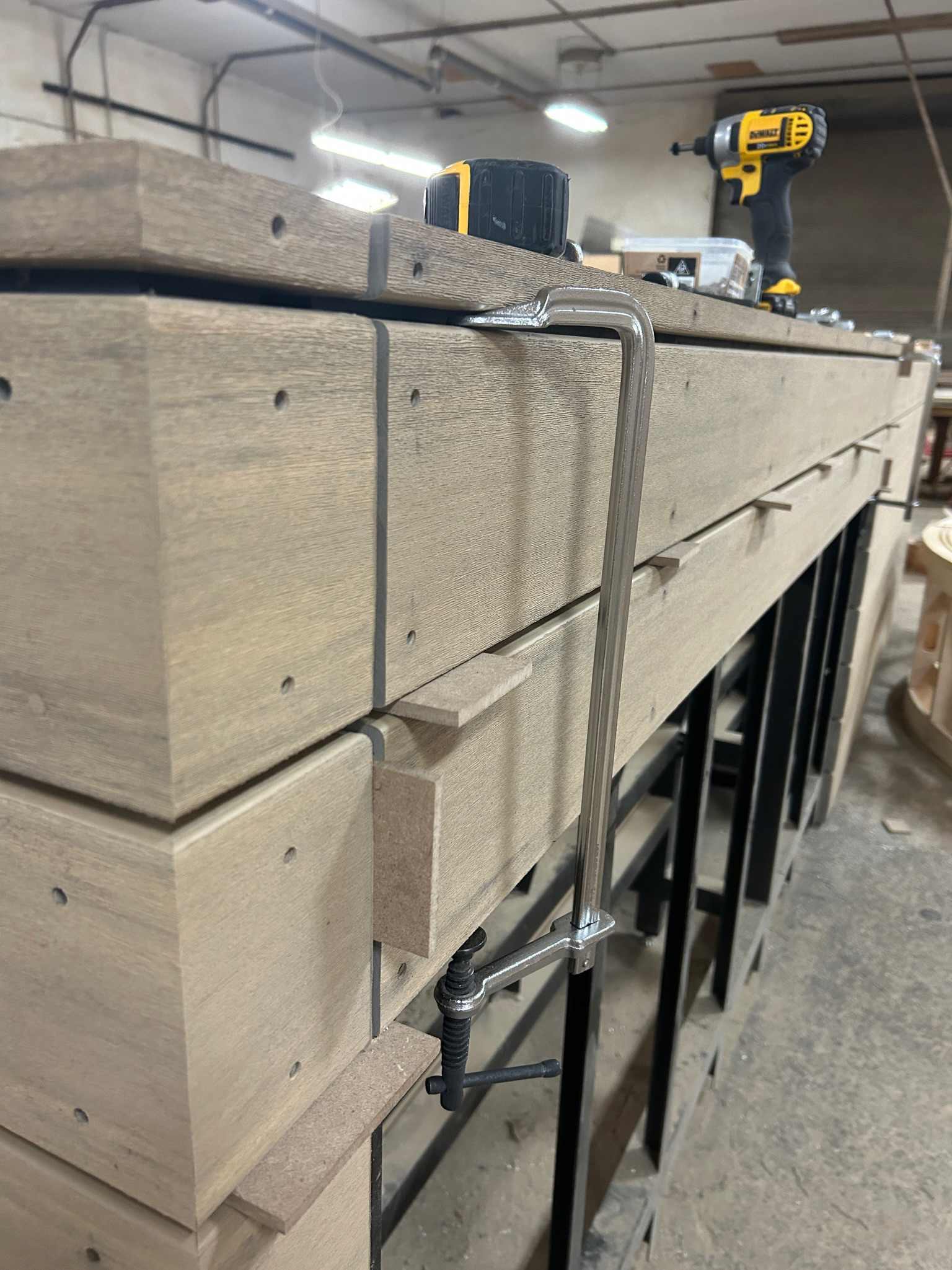
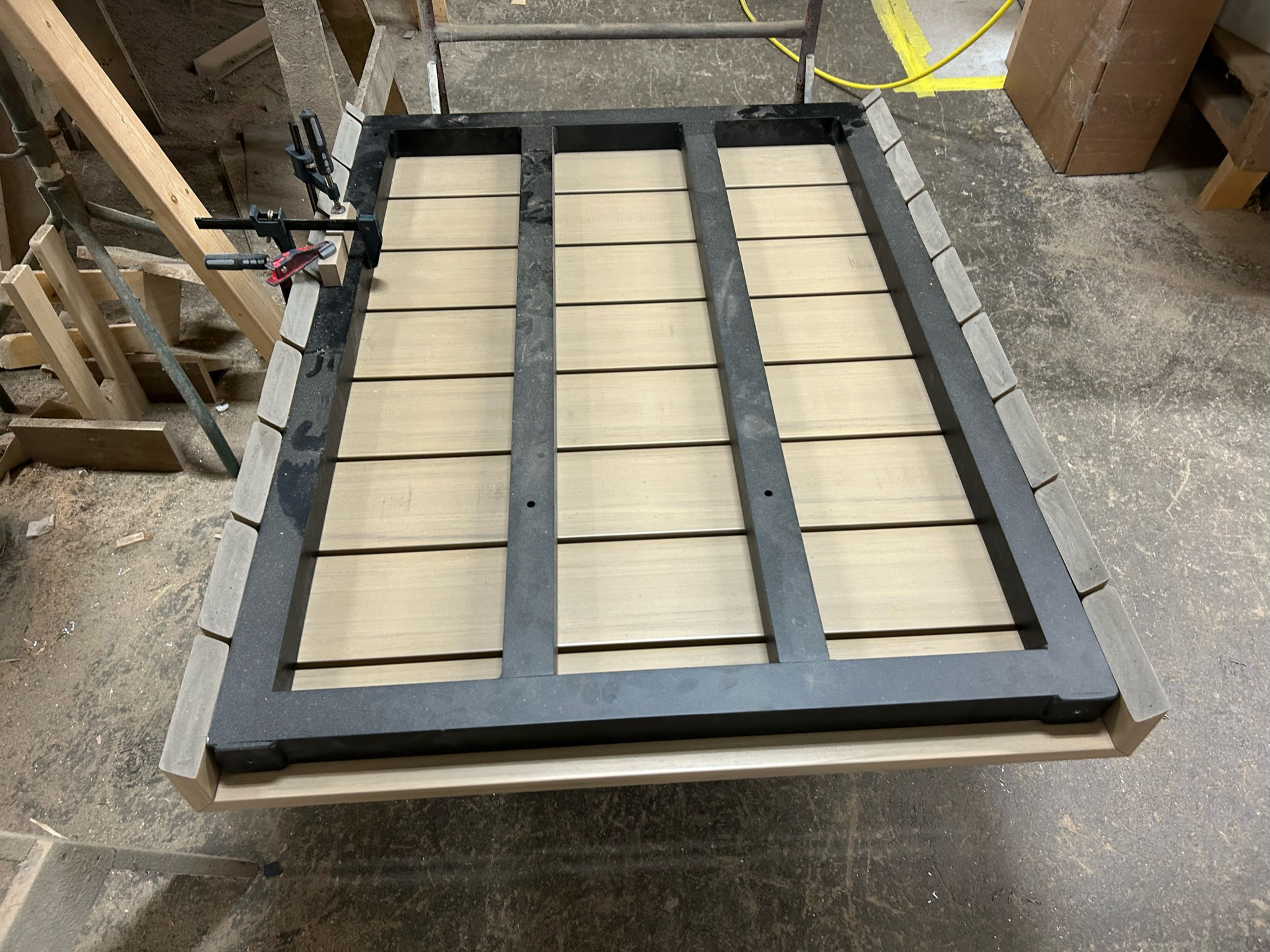
Exterior Banquettes
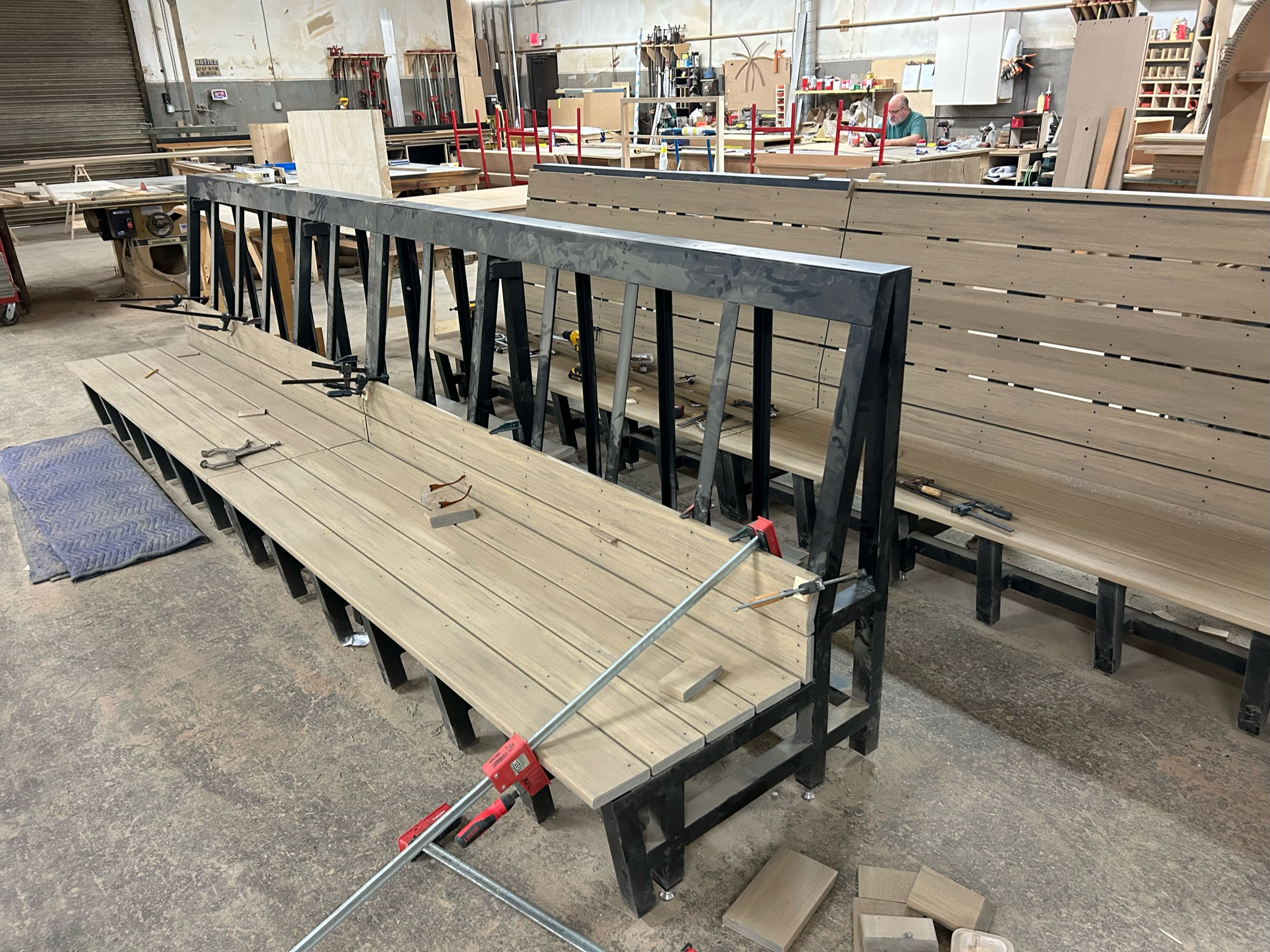
• PVC decking material
• powder-coated metal frame
• hidden screw holes
• consistent 1/4” gaps
• mitred wing-walls and caps
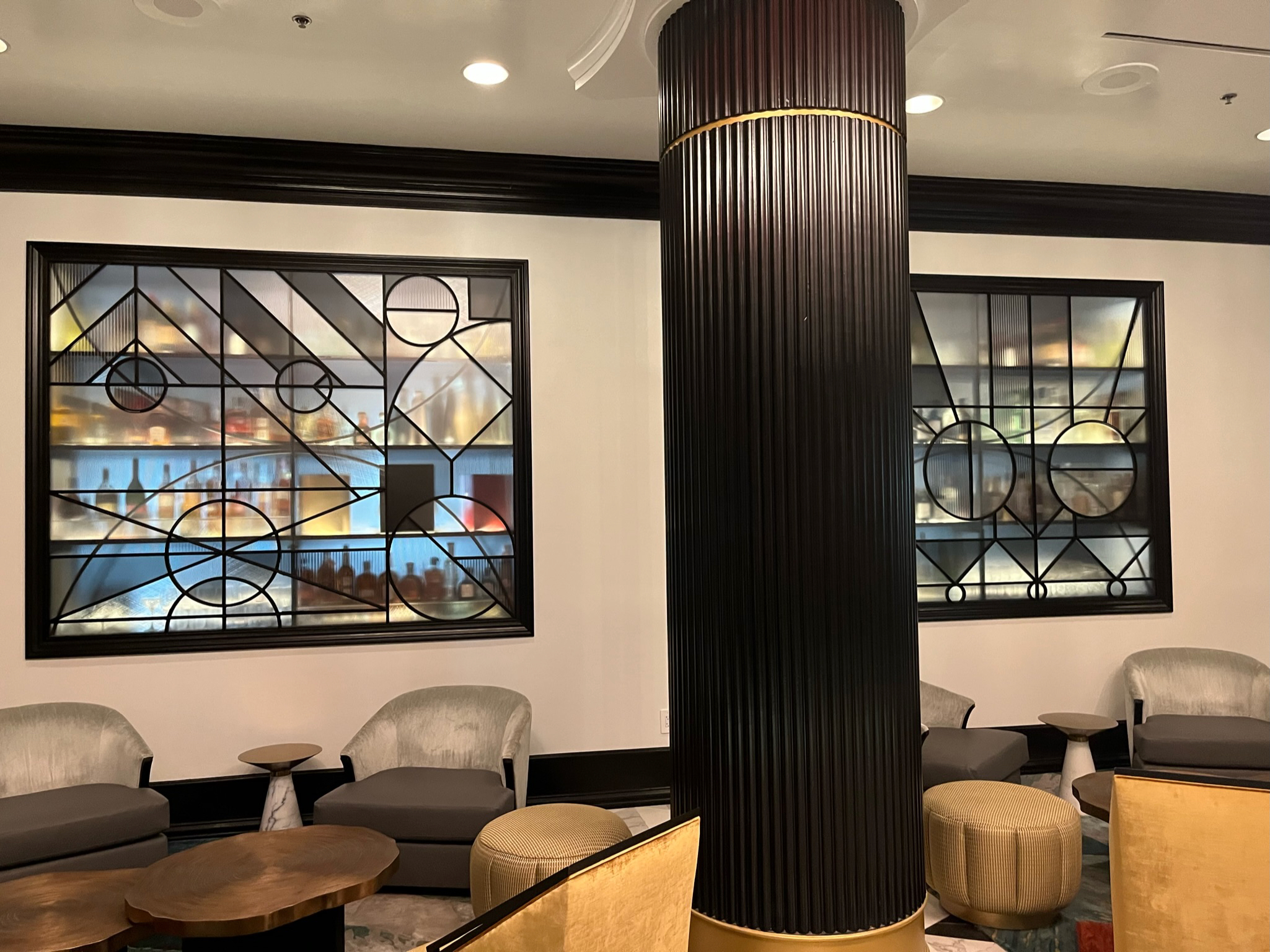
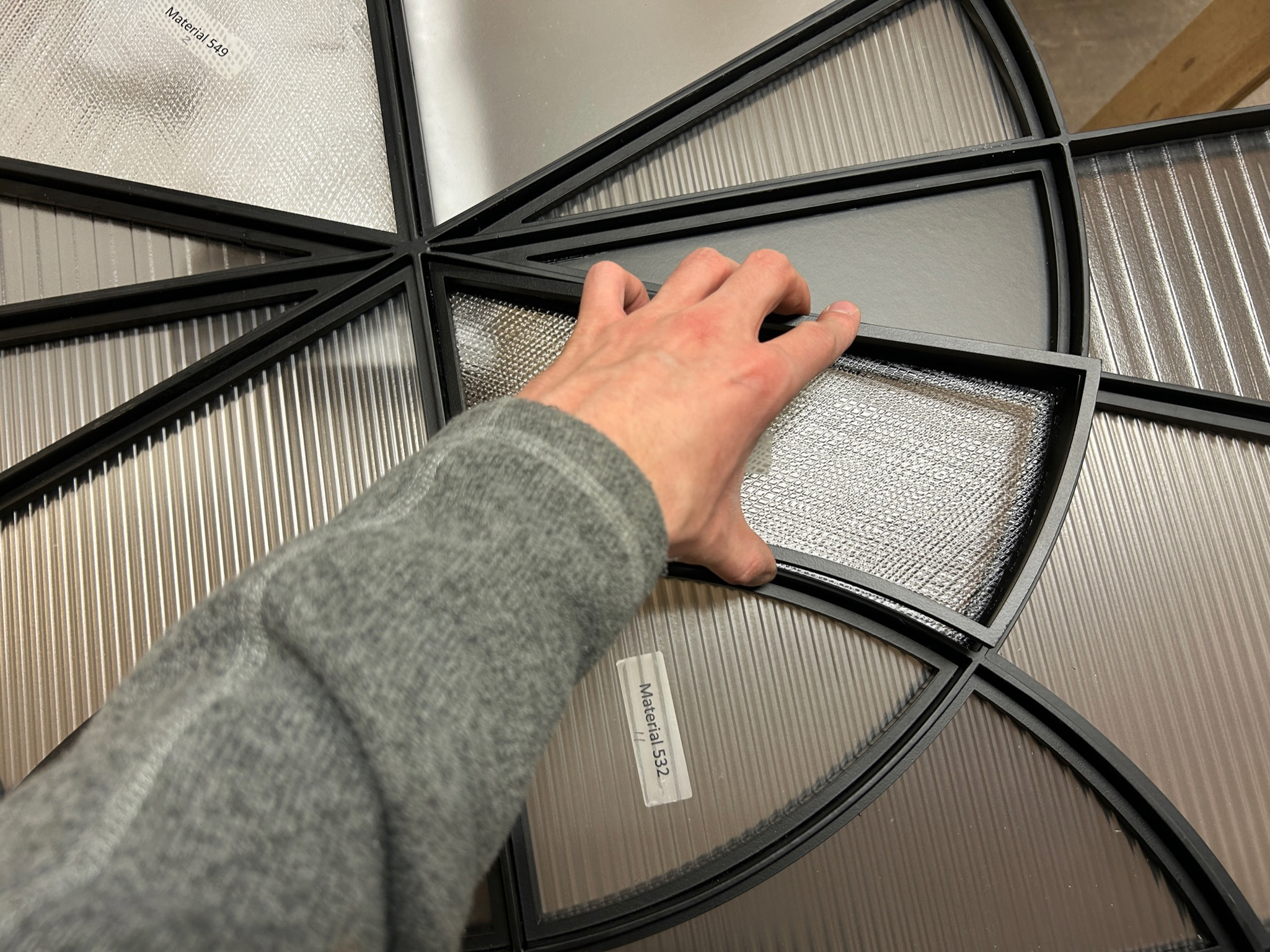
Indoor Screens
• powder-coated mild steel
• textured lexan
• vinyl caulk / RTV silicone
• custom geometric patterns
• 2x asymmetrical screens
• 2x symmetrical doors